
Robotic Surgery in 2026: How AI Is Rewriting the Operating Room
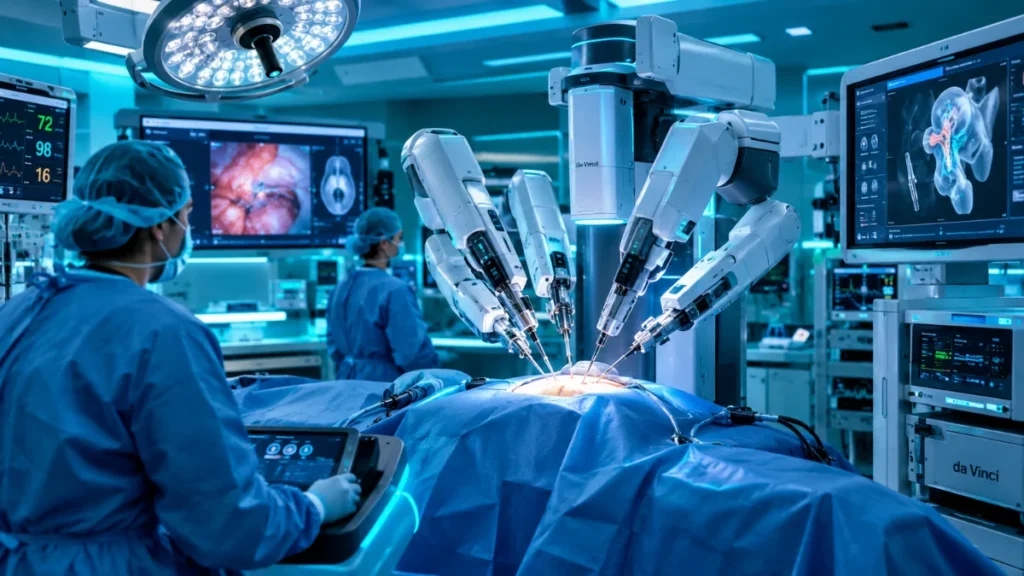
Robotic surgery used to mean one thing: a surgeon sitting at a console, guiding mechanical arms that steadied their hands. In 2026, that picture is changing fast. AI is no longer just assisting the surgeon — it’s starting to plan the operation, predict complications before they happen, and in some cases, act with a level of independence that would have sounded like science fiction five years ago.
Here’s a look at what’s actually driving this shift, and why it matters beyond the operating room.
Robotic Surgery, By the Numbers
Market research firms don’t fully agree on exact figures — estimates vary by methodology — but the direction is consistent across every report: robotic surgery is one of the fastest-growing segments in medtech.
| Metric | Data Point |
| Global surgical robots market size (2026 est.) | Roughly $9–15 billion, depending on the research firm |
| Projected market size by early 2030s | $23–54 billion across various forecasts |
| Typical CAGR (growth rate) | 9%–21% annually, depending on the segment and source |
| Region with largest current market share | North America (roughly 60–74% of the market) |
| Fastest-growing region | Asia-Pacific, led by China, Japan, South Korea, and India |
| Largest procedure category by volume | General surgery (~35% share) |
| First robot used in surgery | PUMA 560, 1985 |
| First FDA-approved surgical robot | ROBODOC, 1992 |
| Year da Vinci received FDA approval | 2000 |
| Approx. annual U.S. robotic hernia repairs alone | ~175,000 procedures |
| Share of robotic surgery research from high-income countries | Roughly 69% of published studies |
The takeaway: robotic surgery is growing fast almost everywhere, but growth, funding, and research remain heavily concentrated in wealthier countries — a gap the industry is only beginning to address.
Read More: Nanomedicine 2026: How AI and Smart Nanotechnology Are Transforming the Future of Healthcare
Surgery Without Borders: The Rise of Telesurgery

This year delivered one of the clearest signs, yet that distance is no longer a barrier in the operating room. A surgeon of Indian origin, working out of a hospital in Wuhan, China, guided a robotic system through an operation on a patient sitting in Hyderabad, India — a gap of more than 3,000 kilometers between the two.
A high-speed network stable enough to carry the surgeon’s hand movements to the robot almost instantly made it possible, closing the delay that once made this kind of long-distance procedure too risky to attempt.
The bigger story here isn’t the single procedure — it’s what it points to. If a surgeon in one country can reliably operate on a patient in another, the same approach could bring specialist-level surgical care to places that have never had it: remote villages, disaster-hit areas, military outposts, offshore platforms, even isolated island or polar research stations.
Put simply, the person performing the surgery no longer needs to stand beside the patient—or even be on the same continent.
From Assistant to Planner: AI Enters the Pre-Op Room

The bigger transformation may be happening before the first incision. AI-powered surgical planning tools now help doctors map out complex procedures in advance — modeling patient anatomy, predicting risk, and adjusting plans in real time as conditions change during surgery.
Industry researchers point to measurable gains from this shift, including a reported reduction in intraoperative complications and shorter operating times when AI-assisted planning is used alongside robotic platforms.
Machine learning models are also being trained to track tissue movement mid-procedure, letting surgical instruments adjust on the fly rather than working purely off a static pre-op scan.
The Race for the Operating Table: New Players Challenge the Old Guard

For years, Intuitive Surgical’s da Vinci system has more or less defined robotic surgery. That dominance is now facing real competition. Medtronic has pushed its Hugo robotic system toward US regulatory approval, aiming directly at Intuitive’s stronghold.
Swiss medtech company LEM Surgical used CES 2026 to showcase its Dynamis robotic platform alongside a broader AI roadmap, signaling that smaller, specialized players are also staking claims in specific surgical niches rather than trying to out-build the industry leader across the board.
Meanwhile, milestone procedures keep stacking up — including a fully robotic heart transplant performed in the US, a case that surgeons pointed to as proof robotic platforms can now handle some of the most delicate procedures in medicine, not just routine minimally invasive ones.
Autonomy: How Far Is Too Far?

The most contested question in the field right now isn’t whether AI belongs in the operating room — it’s how much control it should have. Some robotic systems are already performing narrow, repetitive steps of a procedure with minimal human input.
Bolder predictions go much further: Tesla’s Elon Musk has claimed that humanoid robots could match top human surgeons within just a few years, a claim that has drawn sharp pushback from surgeons currently in training who see a wide gap between flashy demos and the messy reality of clinical practice.
That skepticism is echoed at academic events like the Hamlyn Symposium on Medical Robotics, where 2026 sessions have specifically tackled the risks — not just the promise — of putting more decision-making power into AI-driven surgical systems.
Read More: AI vs Human Jobs: Shocking Future, Who Wins in the Future of Work 2030?
What Robotic Surgery Can Do, What It Can’t (Yet), and What’s Still Being Studied
Robotic platforms have already earned a solid place in several surgical specialties, but they’re far from a universal replacement for every kind of operation.
Procedures already well-established with robotic assistance:
- Prostatectomy (prostate removal) — one of the earliest and most common robotic procedures
- Hysterectomy and other gynecologic surgeries, including myomectomy and ovarian cystectomy
- Cardiac procedures such as mitral valve repair and coronary artery bypass grafting
- Colorectal surgery, including treatment for colorectal cancer and diverticulitis
- Hernia repair and general abdominal surgery
- Kidney and urological procedures, including nephrectomy
- Select head and neck, and increasingly, pediatric urological procedures
Where robotic surgery still struggles or hasn’t fully arrived:
- Highly delicate microsurgery: Fields like reconstructive plastic and lymphedema surgery still face real technical limits, especially around instrument size and precision at the smallest scale.
- Emergency and highly unpredictable cases: Robotic systems are tuned for planned, relatively controlled scenarios — sudden complications or unusual anatomy remain harder for automated components to handle.
- Full haptic (touch) feedback: Surgeons still can’t fully “feel” tissue resistance the way they can in open surgery, which limits robotic use in procedures where touch is critical for judgment.
- Fully autonomous soft-tissue surgery: Soft tissue shifts and deforms unpredictably, which makes it far harder to automate than rigid, bone-based procedures.
What researchers are actively studying right now:
- Autonomous sub-tasks: Robots like Mako and Stryker already perform precise, semi-autonomous bone milling in joint replacements — a hard-tissue task well suited to automation. Researchers are now extending similar autonomy to narrow soft-tissue tasks like retraction, suctioning, and basic suturing.
- Fully autonomous procedures in controlled settings: A widely discussed July 2025 study demonstrated a robot performing a complete gallbladder removal under specific, controlled conditions — a milestone, though still far from routine clinical use.
- AI-assisted outcomes data: Early research suggests AI-assisted robotic surgery can reduce operative time by around 25% and cut complication rates by close to 30%, though these figures come from specific studies rather than universal averages.
- Autonomy levels and regulation: Most current FDA-approved surgical robots operate only at “Level 1” autonomy — basic assistance under constant surgeon control — while researchers and regulators work out how, and whether, to certify higher levels of independence.
What experts and surgeons are actually saying:
Ron Krieger, discussing the case for more autonomous assistance, points to a simple demand problem: with the patient caseload projected to more than double over the next decade, more automated support may be necessary just to keep pace — with physicians shifting toward “a more advisory role” who can “intervene or take control if needed.”
Computer scientist Mathias Unberath frames the shift in broader terms, noting that introducing autonomous surgical technology “will affect pretty much everybody in the health care spectrum” — not just the mechanics of the surgery itself.
Not everyone in the field is convinced full autonomy is coming anytime soon, or that it should.
Consultant surgeons Siong-Seng Liau and Michael Powar at Addenbrooke’s Hospital in Cambridge have said they don’t expect robots to ever fully replace surgeons, though they can imagine a future where surgeons and robots work side by side — comparing it to how pilots work alongside autopilot systems in aviation.
A 2021 survey of surgical professionals found similar hesitation: 52% said they weren’t ready for fully automated surgery, and 77% were opposed to robots replacing surgeons outright, with most preferring a model where surgeons actively monitor and can intervene at any point.
Read More: Why Tech Giants Are Investing Billions in AI Infrastructure
A Quick History: How Robotic Surgery Got Here
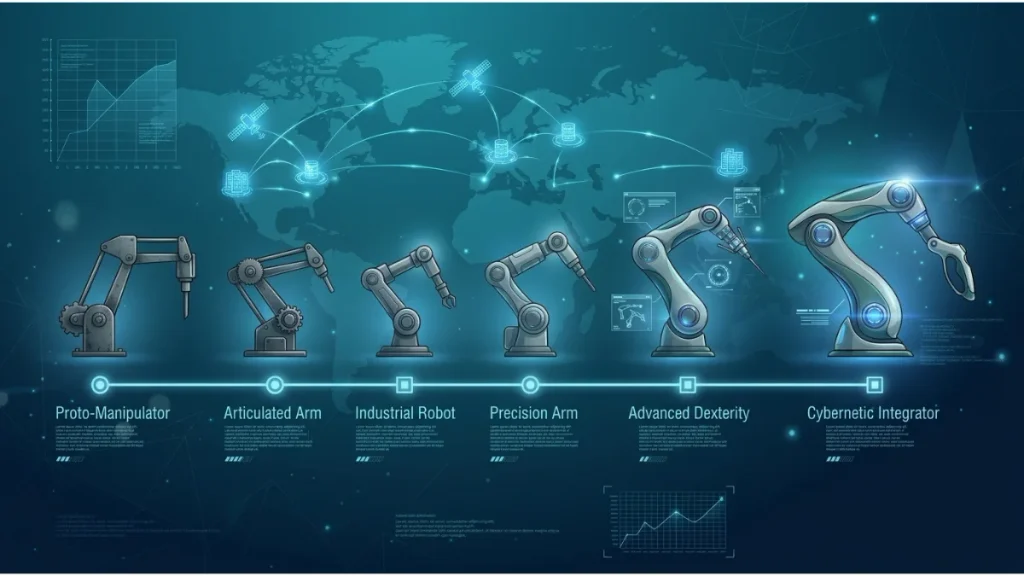
To understand why 2026 feels like such a turning point, it helps to see how far the field has already come — this didn’t start with AI.
- 1983 — Arthrobot: Some historians point to this Canadian-built hip arthroplasty robot as the first surgical robot ever used, though it’s less widely documented than what came next.
- 1985 — PUMA 560: Widely cited as the true starting point of robotic surgery. Guided by CT imaging, it placed a needle for a brain biopsy — a task that had previously been prone to error from a surgeon’s hand tremor.
- 1988 — PROBOT: Developed at Imperial College London, this robot was built specifically to perform prostate surgery.
- 1992 — ROBODOC: Created by Integrated Surgical Systems, ROBODOC precisely shaped the femur for hip replacement surgery and became the first surgical robot to win FDA approval.
- 1993 — AESOP: A voice-controlled robotic camera arm from Computer Motion, giving surgeons hands-free control of the endoscope.
- 1995–1997 — Intuitive Surgical’s early years: Intuitive Surgical was founded in 1995, and by 1997 a robotic system had performed the first full laparoscopic procedure.
- 2000 — da Vinci arrives: The da Vinci Surgical System received FDA approval for general laparoscopic surgery, followed by approval for mitral valve surgery in 2002. It remains the most widely used surgical robot in the world today.
From a single needle placement in 1985 to cross-border telesurgery and AI-driven planning in 2026, the throughline is the same: reduce human error, increase precision, and extend what a surgeon’s hands can do.
Can Developing Countries Adopt This Technology?
Robotic surgery isn’t off the table for developing nations — but the path there looks different from how wealthier countries got here.
The main hurdles:
- Cost: The upfront price of a robotic system, plus ongoing maintenance, is the single biggest barrier for resource-limited hospitals.
- Infrastructure: Robotic ORs need consistent power, climate control, and — for telesurgery — very low-latency internet connections.
- Training capacity: Without existing robotic systems to train on, it’s hard to build a local pool of skilled robotic surgeons in the first place.
How countries are starting to close the gap:
- Starting with training, not machines: Simulation software and virtual reality platforms let surgeons build robotic skills before ever touching a real system, lowering the initial investment needed.
- Regional hub hospitals: Rather than every hospital buying its own robot, some countries are concentrating robotic systems in a handful of major city hospitals that serve a wider region.
- International partnerships: Collaborations with hospitals and universities in countries that already have robotic surgery programs allow knowledge and surgical mentorship to transfer faster than either country could manage alone.
- Homegrown, lower-cost systems: Countries like India and China are now developing their own, less expensive robotic platforms instead of relying solely on imported systems like da Vinci — which should gradually bring prices down region-wide.
- Telementoring: Experienced surgeons abroad can guide a local surgeon through a procedure remotely, without needing full telesurgery infrastructure — a practical middle step before true cross-border operations become common.
The Team Behind a Robotic Surgery: Who’s in the Room?

A robotic operation isn’t a solo act between one surgeon and one machine — it takes a coordinated team, most of whom need dedicated robotic-specific training on top of their regular medical qualifications:
- Lead Console Surgeon — the qualified surgeon who controls the robotic arms from the console and leads the operation.
- Bedside Assistant Surgeon/Resident — stays at the operating table to change instruments, manage the camera arm, and assist directly with the patient.
- Scrub Nurse — manages the sterile field and hands over instruments during setup and the procedure.
- Circulating Nurse — coordinates outside the sterile field, handling supplies, communication, and patient safety checks.
- Anesthesiologist and Anesthesia Team — manage the patient’s anesthesia, which requires some adaptation to the longer setup times and patient positioning robotic surgery often needs.
- Biomedical/Robotics Technician — sets up, calibrates, and troubleshoots the robotic system itself, and handles routine maintenance.
- (For telesurgery) Network/IT Engineer — manages the low-latency connection between the surgeon’s console and the remote operating site.
Training requirements typically include:
- Completing standard surgical residency and specialization first — robotic training builds on existing surgical skill, it doesn’t replace it.
- Formal certification courses on the specific robotic platform (e.g., a da Vinci certification track), often run directly by the manufacturer.
- Simulator-based practice, where trainees perform virtual procedures before touching a real patient.
- A proctored period, where a certified robotic surgeon supervises a new surgeon’s early real-world cases.
- Ongoing case-volume requirements — most certification bodies expect surgeons to perform a minimum number of robotic cases per year to maintain their credentials.
Because this training pipeline is neither cheap nor standardized worldwide, it’s currently one of the biggest reasons robotic surgery adoption still skews heavily toward wealthier countries.
What’s Next: The Road Ahead
Looking beyond 2026, a few trends are likely to define where robotic surgery goes next:
- Cheaper, more compact systems — new entrants like Hugo, Versius, and Dynamis are pushing costs down through competition, which should make robotic platforms viable for more mid-sized hospitals, not just flagship centers.
- Wider telesurgery rollout — as 5G and low-latency networks expand, cross-border and rural telesurgery is expected to move from rare showcase cases to a more routine option.
- Deeper AI integration — expect more real-time decision support, automated risk prediction, and possibly limited autonomous steps within procedures, under close human supervision.
- Standardized global training — pressure is building for more consistent, portable certification standards so a surgeon’s robotic training is recognized across countries, not just within one hospital system.
- Expansion into more specialties — currently concentrated in urology, gynecology, and general surgery, robotic platforms are gradually expanding into cardiac, orthopedic, and even neurosurgical procedures.
Robotic surgery in 2026 isn’t a single technology — it’s a convergence of several: faster networks enabling remote operation, AI models that plan and adapt in real time, new hardware competing for the operating table, and an unresolved debate about how much autonomy is safe to hand over.
The next few years will likely be less about whether AI belongs in surgery, and more about drawing the line between AI that makes surgeons better and AI that tries to replace them.
For now, the surgeon is still very much in the loop — just increasingly working alongside a machine that can see, predict, and adapt faster than any human alone.
Pros and Cons of Robotic Surgery

As with any major leap in medicine, robotic surgery brings genuine advantages alongside challenges the field is still figuring out how to solve.
Pros:
- Sharper precision: The robotic arms smooth out a surgeon’s natural hand tremors and turn broad hand movements into small, controlled ones.
- Less invasive procedures: Working through smaller incisions translates to reduced blood loss, a lower chance of infection, and quicker patient recovery.
- Enhanced visibility: Magnified 3D views let surgeons see far more anatomical detail than they could with the unaided eye in conventional open surgery.
- Reach into underserved areas: As telesurgery matures, a specialist sitting in one country could operate on a patient in another, helping bridge the gap in regions short on trained surgeons.
- Smarter, adaptive planning: AI-driven surgical planning can spot potential risks ahead of time and adjust mid-procedure, which may lower the rate of complications.
Cons:
- High cost: A single robotic surgical system can cost well over a million dollars, before accounting for maintenance, servicing, and per-procedure instrument costs.
- Steep learning curve: Surgeons need extensive hands-on training before they can operate independently, and that training isn’t standardized across institutions or countries.
- Limited tactile feedback: Even advanced systems still can’t fully replicate the sense of touch a surgeon relies on in open surgery.
- Infrastructure dependence: Reliable electricity, high-speed networks (especially for telesurgery), and specialized operating rooms are all prerequisites — not guarantees, in many parts of the world.
- Liability and ethics questions: As systems become more autonomous, who is responsible if something goes wrong — the surgeon, the hospital, or the manufacturer? This remains legally unsettled in most countries.
Frequently Asked Questions
When was robotic surgery first performed?
The first surgical robot, PUMA 560, was used in 1985 to guide a needle for a brain biopsy under CT imaging.
What was the first FDA-approved surgical robot?
ROBODOC, approved in 1992 for use in hip replacement surgery, was the first surgical robot to receive FDA approval.
Is robotic surgery fully autonomous?
No — as of 2026, a qualified surgeon still leads every operation. Some systems perform narrow, pre-programmed steps with minimal input, but fully autonomous surgery remains experimental and heavily debated.
Can developing countries realistically adopt robotic surgery?
Yes, but gradually — typically through regional hub hospitals, simulator-based training, international partnerships, and increasingly, lower-cost homegrown robotic systems rather than large-scale imports of expensive Western platforms.
What’s the difference between telesurgery and regular robotic surgery?
Regular robotic surgery has the surgeon in the same room, operating the console a few feet from the patient. Telesurgery has the surgeon operating from a different city or country entirely, relying on high-speed, low-latency networks.
Will robots replace surgeons?
Not in the foreseeable future. Every major robotic platform today is a tool controlled by a trained surgeon — the debate isn’t about replacement, but about how much decision-making power AI should eventually be trusted with.
Conclusion: Where Robotic Surgery Really Stands in 2026
Strip away the headlines about humanoid surgeons and instant robot takeovers, and what’s left is a more grounded — and arguably more interesting — story.
Robotic surgery in 2026 isn’t a single breakthrough moment; it’s the product of four decades of incremental engineering, starting with a single needle guided by PUMA 560 in 1985 and building, year by year, toward systems that can now cross continents in real time.
What’s changed most isn’t the robot itself — it’s everything around it. Networks are fast enough to make telesurgery genuinely viable rather than a lab demo.
AI models can now plan a procedure before the surgeon ever picks up the console, and adjust that plan mid-operation as conditions shift.
Competition from Medtronic’s Hugo, LEM Surgical’s Dynamis, and a wave of homegrown platforms in India and China is doing what competition usually does: pushing costs down and accessibility up, which matters enormously for the parts of the world still priced out of this technology entirely.
Yet for all that momentum, the data tells a more nuanced story than the marketing does.
Robotic surgery clearly outperforms open surgery in specific, well-documented ways — shorter hospital stays, less blood loss, fewer readmissions, faster recovery.
But it isn’t universally superior; certain procedures still show higher complication rates with robotic assistance than with traditional methods, and outcomes remain closely tied to surgeon experience and case selection rather than the hardware alone.
The technology amplifies skill — it doesn’t replace the need for it.
That’s also where the autonomy debate ultimately lands. The surgeons, researchers, and ethicists working closest to this technology aren’t asking whether robots will eventually operate unsupervised — most agree that’s either far off or undesirable.
The real question is how much of the routine, repetitive work can be safely handed off, freeing surgeons to focus on judgment calls only a human can make.
The aviation comparison surgeons at Addenbrooke’s have drawn is a useful one: autopilot didn’t remove pilots from the cockpit, it changed what they spend their attention on.
For hospitals, students, and health systems watching from the outside, the practical takeaway is this: robotic surgery is no longer a frontier technology reserved for a handful of flagship hospitals.
It’s becoming infrastructure — the same way laparoscopic surgery went from novel to standard over a generation.
The countries and institutions that start building the training pipelines, telementoring partnerships, and simulation-based education now will be the ones ready to adopt the next wave of lower-cost, AI-integrated systems as they arrive.
The scalpel didn’t disappear when laparoscopy arrived, and the surgeon isn’t disappearing now.
What’s arriving instead is a longer, more capable set of hands — guided by data, extended across distance, and still, for the foreseeable future, answering to a human at the console.
References
- HospiMedica — Robotic surgery found to be safer, reduces patient time in hospital
- HospiMedica — Robotic surgery proves comparable to open surgery
- Cambridge Core — Incidence of surgical site infection associated with robotic surgery
- Bridgeport Hospital — Robotic vs. open surgical staging for endometrial cancer
- NCBI/PMC — Use of robotic surgery for the management of orbital diseases: a comprehensive review
- INNOSC Theranostics and Pharmacological Sciences — Application of robotics in modern surgery and critical operations
- Yatharth Hospitals — Robotic surgery: advantages, procedures, and future possibilities
- Superkalam — Human judgment remains vital for safe robotic surgery
- Teesside University Research Portal — Ethical discussions for autonomous robotic surgeries
- Johns Hopkins Hub — Autonomous robotic surgery briefing
- Cambridge Network — Top robotic surgeons at Addenbrooke’s on the future of the field
- Syndicate of Hospitals in Lebanon — History and limitations of robotic surgery (PDF)
- Laparoscopy Hospital — Robotic surgery: a game-changer in modern medicine
- Fortune Business Insights
- MarketsandMarkets
- Mordor Intelligence
- Roots Analysis
- iData Research
- Cambridge Consultants
- MobiHealthNews