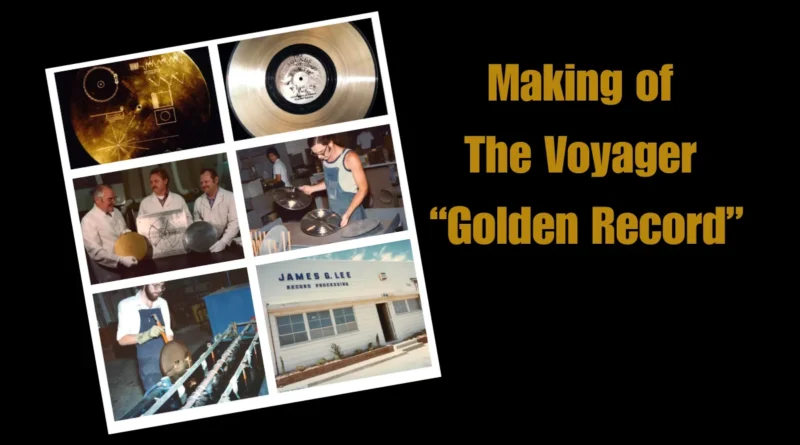
The Making of the Voyager Golden Record: Humanity’s Message to the Cosmos
In 1977, two robotic explorers—Voyager 1 and Voyager 2—launched from Earth as part of the historic Voyager program. Built by NASA to explore the outer planets, the spacecraft carried instruments designed to study Jupiter, Saturn, Uranus, and Neptune. But alongside their scientific equipment was something profoundly symbolic: a golden phonograph record containing the sounds and images of Earth.
This artifact, known as the Voyager Golden Record, was conceived as a kind of cosmic time capsule—a message intended for any intelligent beings that might encounter the spacecraft far in the future. Unlike earlier spacecraft that carried only simple identifiers, the Voyager probes transported a much richer portrait of humanity and life on Earth.
Decades later, the record remains one of the most ambitious attempts humanity has made to communicate beyond our planet. It is both a scientific artifact and a philosophical statement about who we are as a species.
From Pioneer Plaques to a Cosmic Message
The idea of sending a message into space did not begin with the Voyager mission. Earlier spacecraft, such as Pioneer 10 and Pioneer 11, carried small engraved metal plaques. These plaques depicted a human figure, the position of the Sun relative to pulsars, and a diagram of the spacecraft’s origin in the solar system.
While these plaques were groundbreaking, they were relatively simple. By the mid-1970s, scientists believed a more detailed representation of Earth could be included on future missions. The Voyager spacecraft, scheduled for launch in 1977, provided the perfect opportunity.
NASA assembled a small interdisciplinary team to create a message that could represent humanity to the universe. The group was led by Carl Sagan, a planetary scientist and science communicator at Cornell University.
Sagan and his colleagues faced a unique challenge: how to design a message that could potentially be understood by beings with completely different languages, cultures, and technologies?
The solution was to create a phonograph record—a physical medium that could store both images and audio. The concept relied on universal scientific principles and symbolic instructions to explain how the record should be played.
Designing the Golden Record
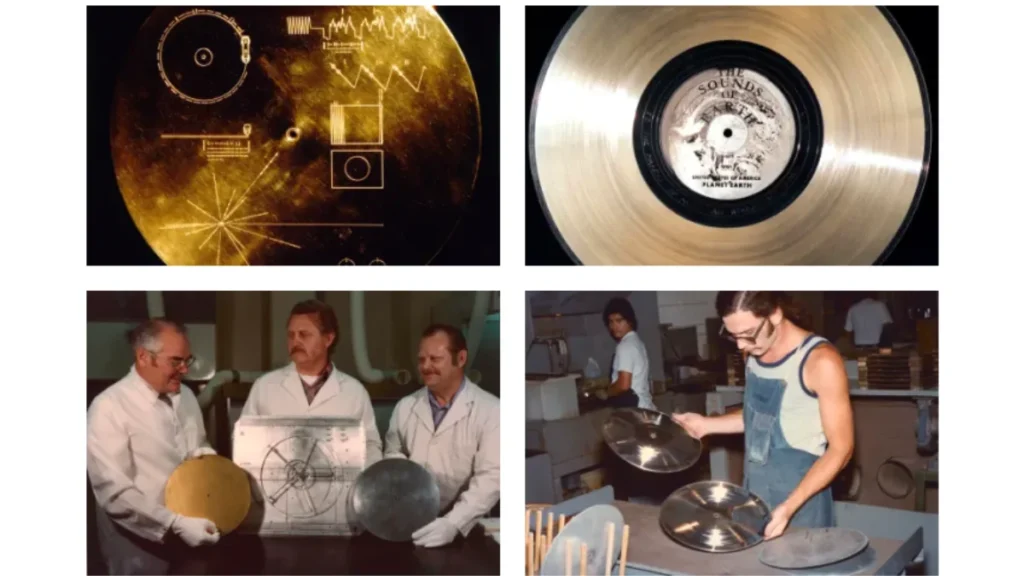
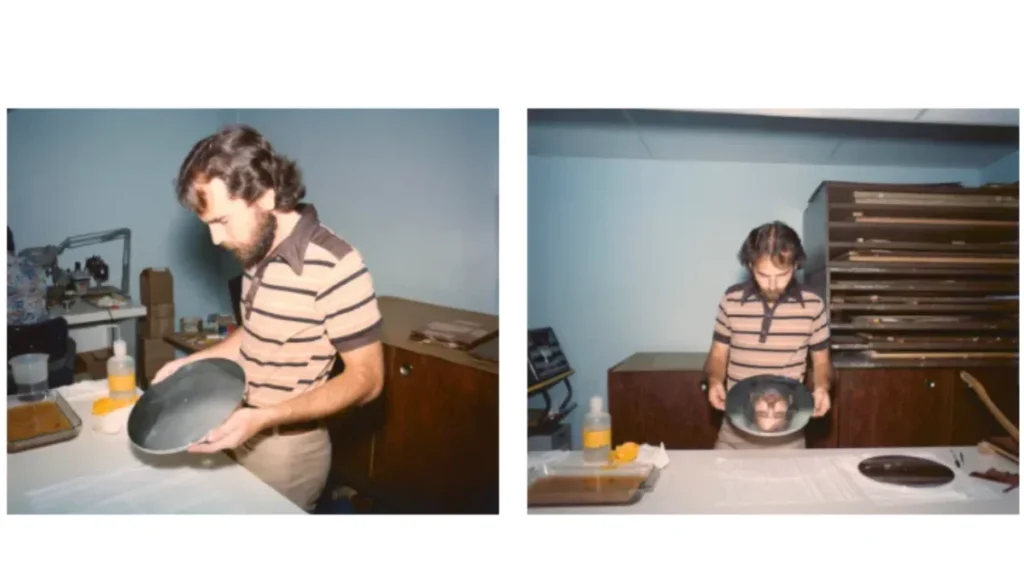
The Voyager Golden Record is a 12-inch gold-plated copper disc, carefully engineered to survive the harsh conditions of space. Gold plating protects the disc from corrosion, ensuring that the information it carries can remain intact for billions of years.
Each record is enclosed in a protective aluminum jacket and accompanied by a cartridge and needle, making it possible—at least theoretically—for another civilization to play it.
But the most remarkable part of the design is not the record itself. It is the instructions etched on its cover.
Decoding the Record: Instructions for Alien Listeners
Because extraterrestrial recipients might have no familiarity with human languages, the designers used symbolic diagrams to explain how the record should be interpreted.
The cover features a series of etched illustrations that function as a step-by-step guide.
Playing the Record
One diagram shows a drawing of the record and stylus. Around the image, numbers written in binary code specify the time it takes for the record to complete a single rotation—3.6 seconds.
This measurement is expressed using a universal time unit derived from the hyperfine transition of the hydrogen atom, one of the most fundamental phenomena in physics. Hydrogen is the most abundant element in the universe, making it a logical reference point for any scientifically advanced civilization.
The instructions also indicate that the record should be played from the outside inward, similar to traditional phonograph records used on Earth.
Decoding the Images
Another set of diagrams explains how to reconstruct images stored on the record.
Unlike digital images, the Voyager pictures are encoded in analog signals. The diagrams show how these signals should be interpreted as a series of vertical lines that gradually build a picture, similar to how early television systems transmitted images line by line.
The instructions specify:
- The duration of each line of the picture signal.
- The total number of lines in each image is 512.
- The structure of the scanning pattern.
To verify that the signals are being decoded correctly, the first image on the record is a simple circle. If reconstructed accurately, the circle will appear perfectly round, confirming that the horizontal and vertical scales have been interpreted properly.
A Map to Earth
Another diagram on the cover provides a cosmic address.
This map uses pulsars, rapidly spinning neutron stars that emit extremely regular radio pulses. By measuring the unique timing of these pulses from 14 different pulsars, the map identifies the location of our solar system relative to the wider galaxy.
Because pulsar rotation rates change slowly over time, any advanced civilization could theoretically determine when the spacecraft was launched by comparing the pulsar periods on the record with their current measurements.
The Hydrogen Reference
Using hydrogen as a baseline ensures the message relies on physics rather than human convention, increasing the likelihood that non-human intelligences could understand it.
A Radioactive Clock
The record cover also includes a small amount of uranium-238, an element that decays at a known rate. Over billions of years, uranium-238 transforms into other elements through radioactive decay.
This ingenious feature effectively turns the Golden Record into a radioactive clock, providing yet another clue to its origin.
What’s on the Voyager Golden Record?
If an alien civilization were ever to manage to decode the instructions and play the record, what would they hear and see?
The final record includes:
- 115 images
- Natural sounds from Earth
- Greetings in 55 languages
- A 90-minute selection of music
Together, these elements form a broad portrait of human civilization and the planet we inhabit.
Images of Life on Earth
The 115 images on the Golden Record depict a wide range of subjects.
Some illustrate scientific concepts, such as human anatomy, cell division, and DNA. Others portray daily life, showing people eating, working, and interacting.
The collection also includes photographs of landscapes and natural environments, including deserts, forests, oceans, and mountains.
Animals—from dolphins and birds to insects and reptiles—appear throughout the images, highlighting Earth’s biological diversity.
Human culture is also represented through scenes of agriculture, architecture, art, and technology. Images show everything from the Great Wall of China to modern cities, transportation systems, and industrial environments.
The goal was not to present a perfect or exhaustive record of Earth, but rather a symbolic overview of the planet and its inhabitants.
The Sounds of Earth
After the images, the Golden Record plays a collection of natural sounds from our planet.
These recordings include:
- Ocean waves crashing on shorelines
- Wind and thunder
- Birds singing
- Whales communicating underwater
- Animal calls from various species
The sequence captures the acoustic environment of Earth, offering a sensory glimpse into life on our world.
These sounds were chosen to represent both natural ecosystems and the dynamic rhythms of the planet.
Greetings in 55 Languages
One of the most touching parts of the record is a series of greetings spoken in 55 different languages.
These greetings begin with Akkadian, a language spoken in ancient Mesopotamia thousands of years ago, and end with Wu, a modern Chinese dialect.
The messages are brief but meaningful, offering simple words of peace and welcome.
The task of organizing these recordings fell largely to Linda Salzman Sagan, who worked with volunteers from universities and communities to locate speakers of different languages.
Many of the participants had little time to prepare. They were simply asked to deliver a short greeting intended for any intelligent beings who might encounter the spacecraft.
The result is a multilingual chorus that reflects the cultural diversity of humanity.
Music from Around the World
The final portion of the record features a 90-minute musical anthology.
The selections span multiple continents, cultures, and historical periods.
They include:
- Classical compositions by Bach, Beethoven, Mozart, and Stravinsky
- Traditional folk music from Asia, Africa, and the Americas
- Indigenous chants and ceremonial songs
- Modern American blues and rock music
One of the most famous tracks included on the record is “Johnny B. Goode” by Chuck Berry, a pioneering rock-and-roll song from the United States.
Other pieces feature traditional instruments such as panpipes, gamelan percussion, and the Japanese shakuhachi flute.
The musical selection was designed to illustrate the creative expression of human culture, showing how music transcends language and geography.
The Message Behind the Mission

While the Golden Record was intended for extraterrestrials, its creators also believed it carried meaning for humanity itself.
Carl Sagan once reflected on the deeper symbolism of the project, noting that the record might never be discovered or played.
The Voyager spacecraft is traveling through vast stretches of space. It could be 40,000 years before they pass near another star system.
Nevertheless, the act of sending the record into the cosmos represented something profound.
It demonstrated humanity’s curiosity, optimism, and desire to connect with the universe.
Sagan described it as “launching a bottle into the cosmic ocean.”
Even if no one ever finds the message, the gesture itself reflects humanity’s willingness to reach beyond our planet.
A Legacy That Endures
Today, the Voyager spacecraft continue their journey through interstellar space, carrying the Golden Records with it.
They remain the most distant human-made objects ever created.
Scientists estimate that the records could survive for billions of years, long after Earth itself has changed dramatically.
In that sense, the Golden Record may become one of the longest-lasting artifacts of human civilization.
The Story Behind the Record
The creation of the Golden Record is documented in the book “Murmurs of Earth,” written by Carl Sagan and several members of the Voyager message team.
The book details how the group selected images, music, and sounds while racing against the launch schedule of the spacecraft.
Though the book is now difficult to find in print, it remains the most comprehensive account of how the record was created.
It serves as a reminder that the Golden Record was not simply a scientific experiment—it was a collaborative human effort, involving scientists, artists, musicians, linguists, and volunteers.
Humanity’s Voice in the Universe
Nearly half a century after their launch, the Voyager spacecraft continue to send scientific data back to Earth.
But their Golden Records may ultimately outlast their electronic instruments.
Long after the spacecraft falls silent, the gold-plated discs will remain intact, drifting among the stars.
If another civilization ever finds one of them, they will discover a small but meaningful portrait of our world: its landscapes, its languages, its music, and its life.
Whether or not the message is ever received, the Voyager Golden Record stands as a powerful symbol of humanity’s curiosity and hope.
It is, in essence, Earth’s greeting to the universe.
FQA: Voyager Golden Record
How Long Could the Golden Record Survive in Space?
The Voyager Golden Record is built from a copper disc coated in gold and stored inside a protective aluminum case. This design helps shield it from the harsh conditions of space, such as radiation and micrometeoroids. Researchers estimate that the record could remain intact for billions of years, allowing it to endure far longer than most human-made objects as it travels aboard Voyager 1 and Voyager 2 through interstellar space.
What is the Voyager Golden Record?
The Voyager Golden Record is a gold-plated phonograph record placed aboard the spacecraft Voyager 1 and Voyager 2 in 1977. Created by scientists working with NASA, the record contains sounds, images, music, and greetings from Earth intended for any extraterrestrial civilization that might discover it in the future.
Who created the Voyager Golden Record?
The Golden Record was developed by a committee led by Carl Sagan of Cornell University. The team included scientists, artists, and researchers who selected images, sounds, languages, and music that could represent humanity and life on Earth.
What is included on the Voyager Golden Record?
The record contains several types of information designed to portray Earth and human civilization, including:
115 images showing life, science, and culture on Earth
Natural sounds such as wind, ocean waves, thunder, birds, and whales
Greetings in 55 languages from people around the world
A 90-minute music collection featuring classical, folk, and traditional music from many cultures
Why was the Voyager Golden Record created?
Scientists wanted to send a symbolic message from humanity to the universe. If an advanced civilization encounters the spacecraft in the distant future, the record could provide insight into Earth, its inhabitants, and human culture.
How can the Golden Record be played?
Instructions engraved on the record’s cover explain how to play it. The diagrams show the correct speed of rotation, how to place the stylus, and how to decode the signals that contain images. These instructions use universal scientific references such as the hydrogen atom transition and a map of pulsars to help extraterrestrial scientists understand the message.
Where are the Voyager spacecraft now?
Both spacecraft have traveled beyond the outer planets and are now moving through interstellar space. They remain the most distant human-made objects ever launched, continuing their journey far beyond the solar system.
Has anyone found the Voyager Golden Record?
No extraterrestrial civilization has discovered the Voyager spacecraft so far. Because space is extremely vast, it may take tens of thousands of years before the probes pass near another star system.
Conclusion: A Message of Hope Beyond Earth
The Voyager Golden Record is more than a scientific artifact—it is a reflection of humanity itself. Carried aboard Voyager 1 and Voyager 2, the golden disc travels silently through interstellar space, holding the sounds, images, and voices of our planet.
Created with the guidance of Carl Sagan and supported by NASA, the record represents a hopeful gesture from Earth—a small but meaningful attempt to say, “We are here.” It captures moments of life, culture, and nature, offering a glimpse of who we are as a species.
Whether or not another civilization ever discovers the record, its existence carries a powerful message. By sending this tiny time capsule into the vast cosmic ocean, humanity expressed curiosity, courage, and a desire to connect with the unknown.
Long after the spacecraft falls silent, the Golden Record will continue its journey among the stars—quietly carrying the story of Earth and the dreams of those who dared to send their voice into the universe. 🌌