AI vs Human Jobs: Shocking Future, Who Wins in the Future of Work 2030?
The debate around AI vs human jobs is intensifying in 2026 as artificial intelligence rapidly transforms industries worldwide, raising urgent concerns about AI job replacement, jobs at risk from AI, and the scale of AI job creation shaping the future of work in 2030.
From global tech hubs to emerging economies, companies are deploying AI to automate operations, reduce costs, and improve efficiency. This shift is happening now, across sectors like finance, healthcare, manufacturing, and media, forcing workers, businesses, and policymakers to rethink how jobs will evolve—and who will benefit—in the coming decade.
Artificial intelligence is no longer a distant concept—it’s actively reshaping the global workforce. From automating routine processes to assisting in complex decision-making, AI is transforming how industries operate and how people work.
As tools developed by companies like OpenAI and Google become more advanced and accessible, a pressing question continues to dominate discussions worldwide: will AI replace human jobs, or redefine them?
The Current Impact of AI vs Human Jobs Across Industries
AI is already embedded in many aspects of modern work, accelerating the shift in AI vs human jobs dynamics. Businesses are leveraging automation to enhance productivity, streamline workflows, and gain competitive advantages.
Tasks that once required hours of manual effort can now be completed in seconds using AI systems. In customer service, chatbots manage thousands of queries simultaneously.
In finance, algorithms analyze vast datasets to detect fraud and predict market trends. In media and marketing, AI assists with content generation, personalization, and audience analytics.
These developments highlight a clear trend: AI is not replacing entire industries but reshaping how work is performed within them. However, this transformation is increasing pressure on workers in roles vulnerable to automation.
Jobs at Risk from AI: Understanding AI Job Replacement Trends
One of the most critical aspects of the AI vs human jobs debate is identifying jobs at risk from AI. These are typically roles that involve repetitive, predictable, and rule-based tasks.
High-risk jobs include:
- Data entry clerks
- Call center agents
- Retail cashiers
- Basic accounting professionals
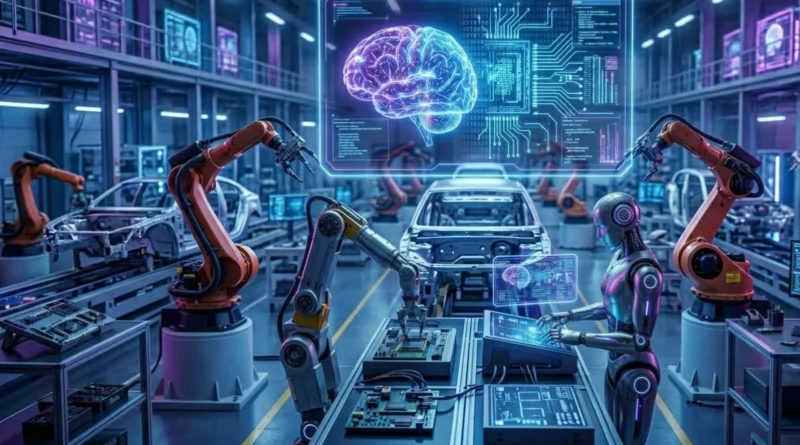
- Manufacturing line workers
AI systems excel in structured environments where processes can be standardized. For instance, machines can process invoices, respond to routine inquiries, and perform assembly tasks more efficiently and accurately than humans. This trend is driving AI job replacement, but it is important to note that most roles are not eliminated. Instead, specific tasks within those roles are automated, leading to job transformation rather than full displacement.
Human Advantage: Jobs Less Affected in AI vs Human Jobs Debate
Jobs that remain resilient include:
- Healthcare professionals (doctors, nurses, therapists)
- Educators and trainers
- Creative professionals (writers, designers, artists)
- Managers and business leaders
- Social workers and counselors
These roles rely heavily on human interaction, empathy, and complex decision-making. While AI can support these professions—for example, by assisting doctors with diagnostics—it cannot replace the human connection they require. In the context of AI vs human jobs, this highlights a crucial insight: the future workforce will prioritize uniquely human skills alongside technical expertise.
AI Job Creation: New Opportunities in the Future of Work 2030
While concerns about automation dominate headlines, AI job creation is emerging as a powerful counterbalance in the AI vs human jobs landscape.
New and growing roles include:
- AI engineers and machine learning specialists
- Data scientists and analysts
- Prompt engineers
- AI ethics and governance experts
- Automation consultants
Technology companies like Microsoft are investing heavily in AI infrastructure, driving demand for skilled professionals. Beyond tech, industries such as healthcare, education, and logistics are also creating hybrid roles that combine human expertise with AI tools.
AI vs Human Jobs: Collaboration Over Competition
The AI vs human jobs narrative is often framed as a competition, but in reality, the future of work is increasingly collaborative.
AI excels at processing large volumes of data, identifying patterns, and executing repetitive tasks. Humans, on the other hand, bring creativity, strategic thinking, and emotional intelligence.
Real-world examples of collaboration:
- Doctors using AI for faster and more accurate diagnoses
- Journalists leveraging AI for research and data analysis
- Businesses using AI to support strategic decision-making
This model—often called “augmented intelligence”—shows that AI enhances human capabilities rather than replacing them entirely.
Future of Work 2030: Predictions for AI vs Human Jobs
The future of work 2030 will be shaped by the ongoing evolution of AI vs human jobs, with both disruption and opportunity defining the landscape.
According to insights from the World Economic Forum:
- 30–40% of jobs may be partially automated
- Demand for AI and digital skills will increase significantly
- Hybrid roles combining technical and human skills will dominate
- Continuous learning will become essential
Rather than a sudden collapse of employment, the transition will be gradual. Some sectors will experience rapid change, while others will adapt more slowly. The defining factor will be how effectively workers and organizations respond to these shifts.
Preparing for AI Job Replacement and Career Transformation
As AI job replacement accelerates, individuals must take proactive steps to remain competitive in the evolving job market.
Key strategies:
1. Learn AI Tools
Familiarity with AI platforms can significantly enhance productivity and employability.
2. Develop Technical Skills
Skills such as data analysis, coding, and digital literacy are increasingly valuable.
3. Strengthen Human Skills
Creativity, communication, and leadership remain areas where humans excel.
4. Commit to Lifelong Learning
Continuous education is essential in a rapidly changing environment.5. Stay Adaptable
Flexibility in career paths will be critical as new opportunities emerge.
Broader Implications: Economic Impact of AI vs Human Jobs
The impact of AI vs human jobs extends beyond individuals to entire economies. Governments and institutions must address challenges such as workforce displacement, inequality, and reskilling.
Organizations like the International Labour Organization emphasize the need for policies that support workers during this transition. This includes investment in education, job training programs, and social safety nets.
If managed effectively, AI could drive economic growth, increase productivity, and improve living standards. However, without proper planning, it risks widening the gap between skilled and unskilled workers.
FAQ
Will AI take all jobs?
No. AI will automate certain tasks but will also drive AI job creation, leading to new roles and transformed careers.
Which jobs are most at risk from AI?
Jobs involving repetitive and predictable tasks—such as data entry and basic customer service—are the most vulnerable.
How can workers prepare for the future of work 2030?
By learning AI tools, developing technical and human skills, and embracing continuous learning to adapt to evolving job demands.
Conclusion: A Transition, Not a Replacement
The debate around AI vs human jobs is often framed as a zero-sum conflict, but the reality is more nuanced. AI is not simply replacing human workers—it is reshaping the nature of work itself.
The coming decade will be defined by transition. Some jobs will decline, others will evolve, and entirely new roles will emerge. The key challenge for individuals, businesses, and governments is to manage this transition effectively.
Adaptation will be critical. Workers who develop new skills and embrace AI as a tool will be better positioned to succeed. Organizations that invest in human capital alongside technology will gain a competitive advantage.
Ultimately, the future of work will not be determined by AI alone, but by how society chooses to integrate and govern it.