AI in the FIFA World Cup 2026: How Artificial Intelligence Could Transform Football Forever
Football is entering a new technological era. The upcoming FIFA World Cup 2026 is expected to become the most advanced tournament in the history of the sport, thanks to the growing role of artificial intelligence. Through a major collaboration between global football governing body FIFA and technology company Lenovo, new AI systems are set to reshape refereeing, tactical analysis, and the fan experience.
The initiative, widely described as AI in the FIFA World Cup 2026, will bring cutting-edge technologies to stadiums across North America. With the tournament expanding to 48 teams and millions of fans expected to follow every match, artificial intelligence will play a central role in helping manage data, improve decisions, and enhance the overall spectacle of football’s biggest event.
For decades, football has relied on human judgment and traditional statistics. Now, the introduction of AI-driven tools could fundamentally change how the game is played, analyzed, and experienced.
The Technology Partnership Behind the AI Revolution
At the center of AI in the FIFA World Cup 2026 is the growing partnership between FIFA and Lenovo. The collaboration aims to combine advanced computing infrastructure with powerful machine learning systems to process vast amounts of football data.
Modern matches generate enormous streams of information. Every pass, run, tackle, and shot produces valuable data points. Artificial intelligence systems can analyze these patterns instantly, revealing insights that would otherwise take analysts hours or even days to uncover.
Through this partnership, high-performance computing platforms will support tournament operations, from match analysis to broadcast production. Officials say the project will ensure that AI in the FIFA World Cup 2026 delivers faster decisions, smarter analytics, and more engaging coverage for global audiences.
The collaboration also reflects a broader trend in sports technology. Major leagues and tournaments increasingly rely on artificial intelligence to improve performance analysis, injury prevention, and fan engagement.
Football AI Pro: The New Brain of Tactical Analysis
One of the most exciting innovations introduced as part of AI in the FIFA World Cup 2026 is a platform called Football AI Pro.
This advanced analytics system acts as a digital assistant for national teams competing in the tournament. Coaches and analysts can use the platform to study opponent tactics, evaluate player positioning, and analyze match patterns in unprecedented detail.
Traditional match analysis often relies on simple statistics such as possession or shots on target. However, Football AI Pro goes far beyond these basic metrics. The system processes thousands of in-game events, including movement patterns, pressing intensity, passing networks, and defensive structures.
By analyzing these variables, the platform can highlight tactical opportunities and weaknesses. For instance, it might detect spaces in an opponent’s defensive line or predict which attacking strategies are most likely to succeed.
As a result, AI in the FIFA World Cup 2026 could significantly change how teams prepare for matches. Coaches will have access to deeper insights than ever before, allowing them to refine strategies and make more informed decisions during the tournament.
AI Refereeing Technology: Making Football Fairer
Refereeing decisions have always been one of the most controversial aspects of football. Even with the introduction of video review systems, fans and players often debate the accuracy of key calls.
The deployment of AI refereeing technology as part of AI in the FIFA World Cup 2026 aims to address this challenge.
Artificial intelligence systems can analyze data from dozens of cameras placed around stadiums. These cameras track player movements and ball positions in real time. Machine learning algorithms then process this information to determine whether a player is offside or whether a foul occurred.
When the system detects a potential offside situation, it instantly alerts the video assistant referee. This automated analysis helps officials make quicker and more reliable decisions.
The technology builds on earlier innovations such as semi-automated offside detection. However, AI-driven systems add a layer of precision by analyzing complex player movements and spatial relationships.
For fans, the result could be fewer controversial decisions and greater trust in officiating.
AI Avatars and the Future of VAR
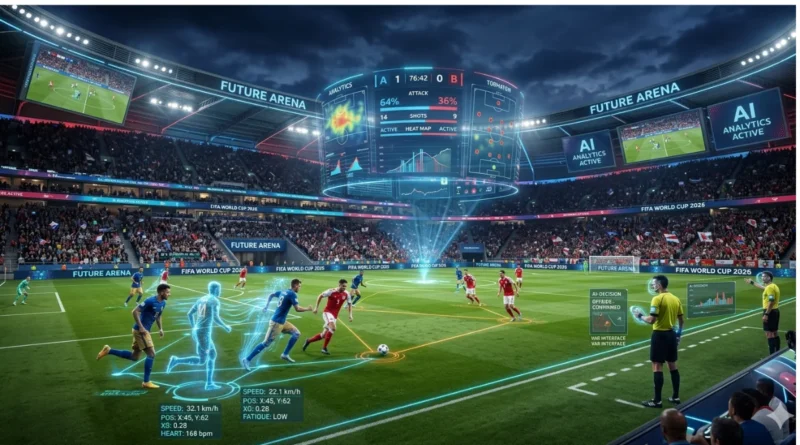
Another fascinating feature associated with AI in the FIFA World Cup 2026 is the use of AI-generated player avatars in the Video Assistant Referee system.
Before the tournament, players may be scanned to create detailed 3D digital models of their bodies. These avatars allow AI systems to reconstruct match situations with incredible accuracy.
When referees review a potential offside call, the system can generate a precise visual simulation showing the exact positions of players and the ball at the moment of the pass. This technology makes it easier for officials to interpret complex situations and explain their decisions.
For viewers watching at home, the use of digital avatars may also enhance transparency. Broadcasters could display animated replays that illustrate how the AI system determined whether a player was onside or offside.
Such innovations highlight how AI in the FIFA World Cup 2026 is not just about data analysis—it is also about improving communication between referees, teams, and fans.
Transforming the Fan Experience With AI
Artificial intelligence is not only helping teams and referees. It is also changing how fans experience football.
During AI in the FIFA World Cup 2026, broadcasters may use machine learning systems to generate real-time insights and visualizations. These tools can automatically identify important moments in matches, such as key passes, defensive interceptions, or tactical shifts.
Viewers might see live heat maps showing player movements or predictive models estimating the probability of a goal. These insights help fans understand the strategic aspects of the game in ways that were previously reserved for professional analysts.
AI can also create personalized content. Fans following specific teams or players could receive customized highlight reels generated automatically by AI algorithms.
As global audiences increasingly consume sports content on digital platforms, these technologies could make football coverage more interactive and engaging than ever before.
The Growing Role of AI in Modern Football
The rise of AI in the FIFA World Cup 2026 reflects a broader transformation occurring across professional football.
Clubs and national teams are investing heavily in analytics departments staffed by data scientists and engineers. These specialists use machine learning models to study player performance, optimize training sessions, and identify emerging talents.
Artificial intelligence can also help monitor an athlete’s health. By analyzing physical data collected from wearable sensors, AI systems can detect early signs of fatigue or injury risk. This allows coaches to adjust training loads and protect players during demanding tournament schedules.
As these technologies continue to evolve, they may become essential tools for teams competing at the highest level of the sport.
A Glimpse Into the Future of Global Football
The FIFA World Cup 2026 will already be historic, as it will be the first tournament featuring 48 teams and hosted across three countries. However, it may also be remembered as the event that fully introduced artificial intelligence into the global spotlight of football.
From tactical analytics to refereeing support and enhanced broadcasting, the influence of AI in the FIFA World Cup 2026 is expected to be felt in every aspect of the competition.
As billions of fans prepare to watch the world’s best players compete, they may also witness the beginning of a new era—one where artificial intelligence helps guide the world’s most popular sport into the next generation.
FAQ: AI in the FIFA World Cup 2026
What is AI in the FIFA World Cup 2026?
AI in the FIFA World Cup 2026 refers to the use of artificial intelligence technologies to support refereeing, match analysis, and fan engagement during the tournament.
What is Football AI Pro?
Football AI Pro is an advanced analytics platform that provides teams with tactical insights and performance data powered by artificial intelligence.
How will AI help referees in the World Cup?
AI systems analyze player and ball tracking data in real time, helping referees make faster and more accurate decisions, especially for offside calls.
Will AI change how football is played?
Artificial intelligence is expected to influence tactics, performance analysis, and training methods, but the core gameplay will remain driven by human skill and strategy.