
Commercial Applications of Nanobots in Healthcare: The Next Medical Revolution
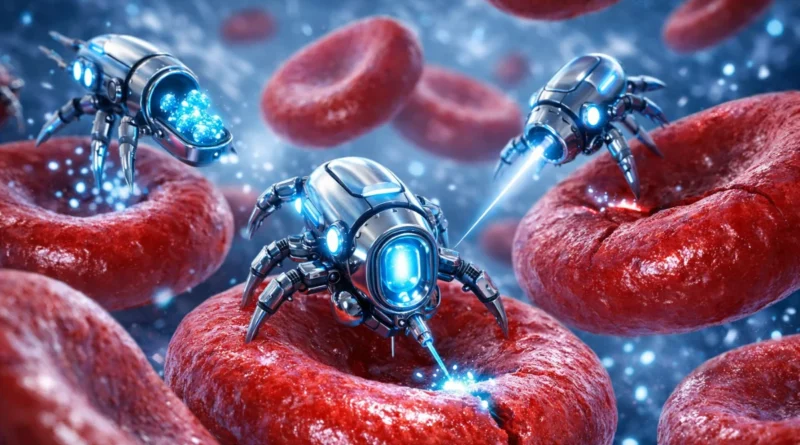
Commercial Applications of Nanobots in Healthcare explain the usage of tiny particles of robotic devices that are developed through Nanotechnology to identify and cure sicknesses at a Microscopic level. By 2026, these technologies are pressing toward commercialization and show particular promise for targeted drug delivery (e.g., to specific sites in the body), cancer therapy, and real-time diagnostic imaging — leading to more precise, efficient, and minimally invasive medical solutions.
History of Nanobots
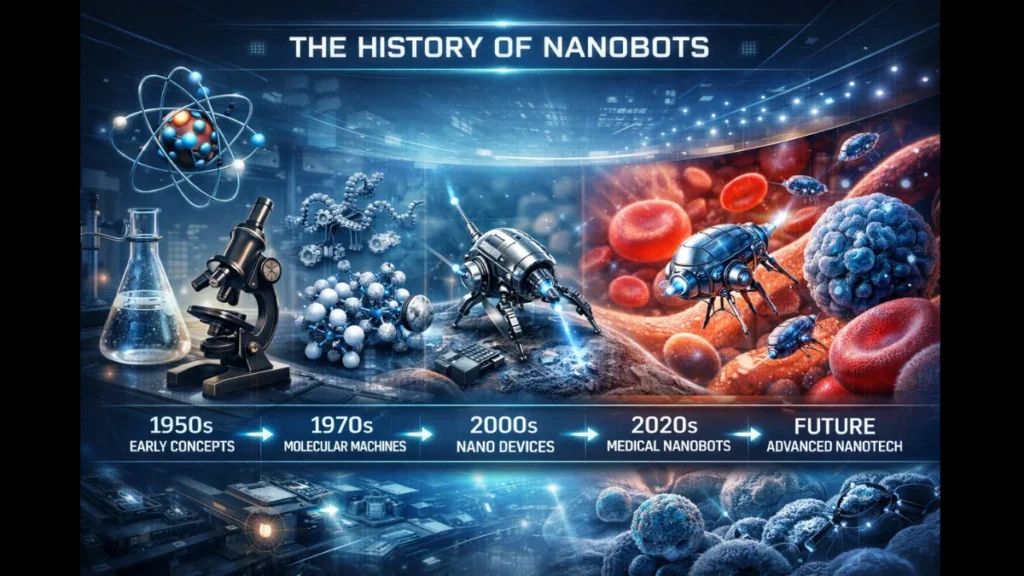
Because existence is tightly connected with the science and technology of nanoscale matter manipulation. This concept developed over time from theoretical ideas to initial experimental medical systems rather than as the result of a single moment of invention.
The Conceptual Foundation (1950s–1970s)
The modern concept of nanobots can be traced back to a lecture given by physicist Richard Feynman in 1959, when he proposed manipulating atoms and constructing machinery at very small scales in his famous talk “There’s Plenty of Room at the Bottom.”
This idea served as the theoretical basis for modern nanotechnology, even though no actual nanobots existed at the time.
Emergence of Nanotechnology (1980s–1990s)
The 1980s saw the official introduction of the term nanotechnology, along with advances in molecular engineering and materials science. Scientists began developing nanoscale structures like nanoparticles and DNA-based assemblies, which later became the building blocks of nanobot construction.
This was the transition from theoretical nanosystems to early experimental nanosystems, which occurred primarily in medicine and materials science.
Early Medical Nanodevices (2000s)
Research organizations started investigating nano-scale drug delivery systems in the 2000s. These weren’t full-fledged autonomous nanobots but rather smart nanoparticles designed to deliver drugs directly to a certain area in the body.
Key developments included:
- Targeted chemotherapy delivery systems
- DNA-based nanomachines
- Magnetic nanoparticle navigation experiments
It was during this time that the foundations for current medical nanobots were built.
College postgraduate computer education semester AI Integration (2010s–2020s)
From the 2010s onward, things sped up — thanks to advances in robotics and biotechnology as well as artificial intelligence. Universities such as MIT, along with laboratories around the world, engineered DNA nanobots and programmable nanosystems that could detect biological signals.
During this phase:
- Smart drug delivery systems have evolved significantly
- Initial iterations of nanorobots were studied in experimental settings.
- AI started to become involved in controlling nanoscale behavior
Modern Era (2020s–Present)
By the 2020s, nanobots will take strides toward first applications in early-stage commercialization for targeted real-time drug delivery in health care, cancer research systems, and diagnostic systems.
Although true, fully autonomous medical nanobots are not yet widely available on the market, hybrid systems employing both AI and nanotechnology are currently undergoing testing in clinical settings.
Regulations from bodies like the FDA still govern research under these circumstances to ensure safe and regulated proliferation.
Quick Facts
In 2026, the Commercial Applications of Nanobots in Healthcare are entering an early commercialization phase, with the market valued at approximately $1.5–$2.5 billion and expected to grow rapidly in the coming years.
Nanotechnology and AI-based medical systems are mainly pushing this innovation. Nanobots are being used in key industries such as hospitals and healthcare to treat patients with high accuracy, the pharmaceutical industry to deliver targeted drugs, biotechnology for cellular research, and medical robotics for minimally invasive surgical procedures.
Although many of the applications of these nanobots remain in clinical trial phases — particularly with cancer therapy and drug delivery — some early commercial uses have been developed in diagnostics and experimental treatments, while advanced nanobot systems continue to be explored.
Countries including the United States (and associated institutions like MIT), China, Germany, and Japan are pouring heavy investments into the next generation of medical technologies.
What Are Nanobots in Healthcare?
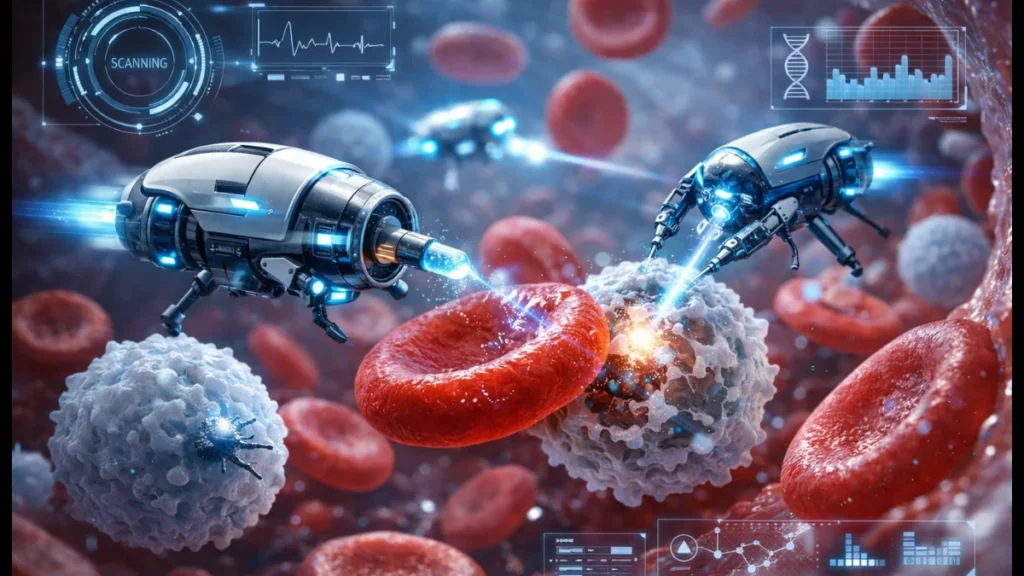
Microscopic Machines That Can Move Through Your Body. These machines are so small that you cannot see them with your eyes, but still, they will help to find, follow, and cure many diseases.
They were built based on some principles of nanotechnology (nanotech). These machines are able to operate at the cell/tissue/molecule level. As a result of this ability to work at an incredibly fine resolution, they can do their job much better than regular medical equipment.
A better way to think about how nanobots work would be to call them “intelligent” medical assistants. The goal is for nanobots to be able to provide medical assistance throughout your body while being able to navigate through the bloodstream and to reach specific targets within your body (e.g., tumor/infected area) once injected into the body via an injection.
Many have integrated artificial intelligence; therefore, the nanobot’s goal is to be able to determine if there are any abnormal cells, respond to biological signals (i.e., communicate), and take action based upon those signals (i.e., release a medicine to the area of interest, collect diagnostic information in real-time).
The primary means by which nanobots function include mechanical systems such as magnetic steering, chemical sensing, or programming. After they enter the body and reach the bloodstream, they can navigate through the body, locate diseased cells, and complete a predetermined task(s) with high levels of accuracy.
It is the integration of micro-technology and AI-based controls that makes nanobots a new trend in health care.
The most important thing that distinguishes nanobots from all other medical technologies is the size of the device and its precision. Traditional medical devices (surgical instruments/drug therapy) are typically large enough to affect larger areas of the body, often impacting healthy tissue.
On the other hand, because nanobots are capable of operating at the cell/molecular level, they can target affected tissue with great precision with fewer side effects. This transition from general intervention to precision targeting is one reason why nanobots are seen as a major innovation in health care.
How Nanobots Function within the Human Body
Nanobots operate on the human body through a multi-faceted operational process that involves sequencing a series of actions. Nanobots based on principles of nanotechnology are micro-scale engineered devices with intelligent control systems for targeted medical benefits.
Ways of Entry (How Nanobots Enter the Body)
Depending on the treatment goal, nanobots are introduced into the body through minimally invasive techniques. Injection into the bloodstream is the most common method, which allows them to circulate quickly and reach affected regions.
They may also be given in capsule form, especially for gastrointestinal diseases, or applied to a target tissue. These approaches mitigate patient discomfort while optimizing the delivery process.
Navigation (How They Move and Reach Targets)
Nanobots also have to negotiate the labyrinth of a biological environment and find their way through the body once they are in. A mix of guiding classic magnetic fields from one end of the pipe to the other, chemical signals heeding the tube’s location, and an AI-assisted control.
Guiding them via external magnetic fields, nanobots navigate blood vessels (for example), while onboard sensors allow them to react to stimuli in the environment. Superior models rely on artificial intelligence to fine-tune movement, sidestep hazards, and enhance targeting precision in real time.
Target Detection (How Do They Detect the Diseases)
Nanobots are designed with sensors that help them identify abnormal biological markers. Such targets include cancer cells, infections, or damaged tissues.
They identify targets by detecting unique chemical signatures, like proteins or alterations in cell structure. Nanobots are excellent for diagnostics and preventive care because of this ability, as they can detect diseases at a very early stage (even before the symptoms become overwhelming).
Nanobots Inside The Body: Action
Once they find their target, the nanobots do exactly what they are programmed to do — perform a specific medical duty. These actions may include:
- Targeted drug release: Directly releasing medication into diseased cells to increase effectiveness and reduce side effects
- Cellular repair: Supporting the regeneration of injured tissues
- Destroying pathogens: Eliminating bacteria, viruses, or toxins within the blood
- Micro-surgery: Carrying out very precise interventions at a cellular level
Why This Process Matters
This whole chain of actions—starting with the entry of an action—is why nanobots are touted as a game changer in modern medicine. But, unlike conventional treatments that’re typically systemic and damage large parts of the body, nanobots work with laser-like precision to enhance outcomes while protecting healthy tissues.
Simply put, nanobots work like smart, miniature medical agents—able to go through the body and locate disease threats while simultaneously administering specific treatment routes(however, never possible before).
Top Commercial Applications of Nanobots in Healthcare
The Commercial Applications of Nanobots in Healthcare are rapidly expanding as research moves closer to real-world deployment. Built on advances in Nanotechnology, these microscopic systems are enabling highly precise, efficient, and minimally invasive medical solutions across multiple domains.
Targeted Drug Delivery
Targeted drug delivery is one of the most advanced and commercially viable applications of nanobots, which has become an essential component in precision medicine.
Conventional drug treatments typically travel throughout the whole body, interacting with both healthy and diseased cells. But nanobots can deliver a drug directly to particular cells or tissues — say, tumors or inflamed areas.
This precision approach provides energy where needed, thereby enhancing drug potency and minimizing doses. Consequently, patients suffer few side effects, such as toxicity or damage to normal organs.
Pharmaceutical companies are increasingly investing in nanobot-based delivery systems to improve the treatment of chronic diseases such as cancer, diabetes, and cardiovascular conditions.
Cancer Treatment (Oncology Breakthroughs)
Nanobots Revolutionizing Oncology Precision Targeting Of Tumor And Local Therapy. Unlike typical chemotherapy or radiation that also damage healthy cells, nanobots can recognize cancer cells by their specific biological markers and release the treatment right at the tumor site.
Pioneering research organizations such as MIT and IBM Research are creating nanobot prototypes that can reduce the size of tumors, suffocate cancer cells by severing their blood supply, or make current treatments more potent. These innovations could significantly increase survival rates while lessening the physical toll on patients.
Minimally Invasive Surgery
Nanobots are already paving the way for new opportunities when it comes to micro subscription because these little powerhouses can facilitate physicians to do procedures at a cellular or tissue level, without traditional surgery. These nanodevices can travel through the bloodstream to invade hard-to-reach areas in the body, like the brain or deep organs.
Such an approach does away with the need for big incisions, resulting in quicker recovery times, less pain, and lower chances of complications. One day, procedures performed with the help of nanobots may be a routine alternative to traditional surgery, especially in sensitive operations where precision is crucial.
Disease Detection & Diagnostics
Nanobots also find medical applications in early and precise diagnosis. With the help of sensors, nanobots are capable of performing early disease diagnosis by detecting slight changes at the molecular or cellular levels in the body.
They can also be used to monitor your health in real-time, gathering health information and sending it out for further analysis.
This is particularly useful in chronic disease management, where providers can monitor disease progress and adjust treatments in real time. Nanobots have potential uses as diagnostic tools that could lower the time and cost of standard tests.
Bloodstream Cleaning & Infection Control
Nanobots are being designed to act as tiny “clean-up systems” in the bloodstream. These devices are capable of clearing toxins, outgoing bacteria, viruses, and other harmful substances that help prevent or control infections.
In critical care scenarios — such as sepsis or severe infections — nanobots could quickly “debacterize” areas of the body before pathogens have a chance to spread. This application has high commercial potential within hospital settings where managing infection control is still a major challenge.
Why These Applications Matter
In combination, these use cases shed light on the Commercial Applications of Nanobots in Healthcare and their potential life-changing impact. Nanobots are revolutionizing the way modern medicine approaches some of the most complicated health issues by allowing for precise treatment, reducing side effects, and enhancing patient outcomes.
Practical Use Cases and Companies Pioneering the Way
Nanobots within Healthcare are commercially driven methods in academic research, corporate innovation, and early-stage commercialization. Although fully autonomous nanobots are an evolving science, a number of leading institutions and companies have already achieved breakthroughs that are advancing clinical trials toward real-world deployment.
IBM Research (Nano-Medicine & Drug Delivery)
IBM Research has actively pioneered the field of nano-medicine and the development of polymer-based nanostructures to act like programmable nanobots. Their research centers on designing microscopic particles that can find infections in the body and target specific infected cells to deliver drugs.
- News: Soft Nanomaterials & Drug-resistant Bacteria
- Clinical Relevance: Initial testing for infection control and targeted therapy
- Commercial Readiness: Shift towards deployments with pharmaceutical industries for scalable medical applications
MIT (DNA Nanobots & Smart Delivery Systems)
At MIT, researchers developed DNA-based nanobots that carry and release drugs in response to targeted biological signals. These nanobots are designed to open and administer treatment exclusively upon reaching specific cells, including cancer cells.
- Finding: Nanobots made from DNA that can target tumors
- Clinical Trials: Experimental validation in cancer models and ongoing translation
- Business Outlook: Robust pipeline for biotech startups & licensing deals
Nanobotics Inc (Emerging Commercial Player)
Nanobotics Inc is among a new generation of startups focused on commercializing nanobot technologies. These companies are developing nanoscale robotic systems for scalable targeted therapeutic and diagnostic delivery.
- Focusing on: Medical nanorobots for precision therapy and minimally invasive procedures
- Development Stage: Prototype development & early clinical collaborations
- Market Strategy: Collaborate with healthcare institutions and biotech companies to boost adoption
From Lab to Market — Industry Insight
A clear trend emerging across these organizations — nanobot technology is moving out of the research labs and into clinical settings. Although the majority of applications remain in clinical and pre-commercial stages, recent advances within fields such as Nanotechnology, AI, and biotechnology are speeding real-world adoption.
This will take place over the next 5–10 years, at which point hospitals, research institutions, and private companies will work together to create commercially viable infrastructure for the implementation of nanobots in medicine as a foundational technology.
Benefits of Nanobots in Healthcare
These Nanobots help in the Commercial Applications of Nanobots in Healthcare for various purposes. Drawing upon innovations from Nanotechnology, nanobots allow a movement toward more efficient, accurate, and patient-centric health care.
Precision Treatment
Nanobots could provide highly targeted treatment at the cellular or molecular level, which is one of their most significant advantages. In contrast to broad-acting therapies, nanobots can be directed at only diseased cells — say, cancerous tissues or infected areas.
This precision allows effective treatment with minimum collateral damage to normal cells. This is especially important for complex or multifactorial conditions such as cancer, neurological disorders, and cardiovascular diseases, where the precision of the trained model can have a tight correlation with patients’ outcomes.
Reduced Hospital Stays
Nanobot-influenced therapies tend to be less invasive, requiring fewer operations and lower physical trauma on the body. This leaves patients free from long hospital stays, and they usually recover much more quickly.
For the healthcare systems, this means higher patient turnover, less burden on hospital resources, and better efficiency overall. In many instances, surgeries that previously required weeks were reduced to days or even hours of recovery.
Lower Long-Term Healthcare Costs
Nanobot technologies may have high research and development costs, but they hold a long-term potential to greatly reduce the expense of healthcare overall. Nanobots can reduce the need for repeat procedures, hospital admissions, and long-term care by enabling early diagnosis, improving treatment precision, and preventing disease progression.
And for patients and health care providers alike, that means more cost-efficient management of chronic and complex diseases. In the long term, widespread adoption could generate significant cost savings among global healthcare systems.
Personalized Medicine
Nanobots are a crucial facilitator of personalized medicine — treatments customized to an individual’s specific biological profile. Nanobots can tailor their activities to the patient’s needs by analyzing local cellular conditions and responding to real-time data.
This strategy enables personalized drug delivery, adaptive treatment regimen, and continuous monitoring of prescribed therapies, all of which facilitate improved therapeutic responses. Nanobots used in personalized medicine is a huge departure from the traditional medicine model of “one size fits all.”
Why These Benefits Matter
Combined, these benefits explain why the Commercial Applications of Nanobots in Healthcare is revolutionary.
Nanobots, with their combination of precision, efficiency, and personalization capabilities, could revolutionize treatment at the cellular level up to the eukaryotic level, ultimately making outbreak control easier and more efficient during future pandemics while reducing disease generalization in humans, thus leading towards a healthier mankind within reach.
Challenges & Risks
Although the Commercial Applications of Nanobots in Healthcare hold significant potential, there are numerous hurdles that need to be overcome before we can truly see their mass integration into healthcare.
These risks concern credibility, regulatory approval, and sustainable market success.
Safety Concerns
The primary problem to solve is making sure that nanobots are safe when introduced into the human body. They work on a microscopic level, so despite their rapid proliferation, we still don’t know much about their long-term biological impact. Nanomaterials can lead to unintended immune responses, toxicity, or accumulation of nanomaterials in critical organs.
While researchers are hoping to make these nanobots biodegradable and biocompatible, undergo the requisite clinical trials needed before receiving approval for common use in medicine.
Regulatory Barriers
Commercialization faces a huge barrier — regulation. Agencies such as the FDA mandate rigorous clinical trials and safety validation before approving new medical technologies.
Nanobots are also particularly complex because they represent a confluence of drugs, devices, and software. This uncertainty in classification and approval pathways hinders the research-to-market transition.
Ethical Issues (Privacy & Control)
Nanobots would also invite other ethical questions, for example, around patient privacy, data security, and control. Since some nanobots might gather real-time biological data from individuals, questions arise as to how that information will be stored, accessed, and secured.
There is also a debate about how autonomous these systems should be. As another instance, AI-guided nanobots acting autonomously within the body may have issues of accountability and oversight if something goes wrong.
High Development Costs
Creating nanobots requires a large investment in research, testing, and manufacturing. The miniaturized scales at which these devices are designed and produced make the process both expensive and time-consuming, most of all.
This high cost can delay commercialization and limit accessibility, particularly in developing healthcare markets. As technology matures and scales, costs are assumed to drop over time.
Why These Challenges Matter
Mitigating these risks is a must to secure the future of Commercial Applications of Nanobots in Healthcare. Lack of clear safety standards and regulatory frameworks will leave limited large-scale adoption. Nevertheless, continuous efforts and cooperation among researchers, regulators, and industry players is slowly clearing the path for controlled usage.
Market Size & Future Growth (2026–2035)
Commercial Applications of Nanobots in Healthcare will find themselves in one of the fast-growing segments of high-tech medical applications supported by Nanotechnology breakthroughs, driven by demand for AI technology and precision medicine.
Current Market Valuation (2026)
As of 2026, the global nanobots and nanomedicine-related healthcare market is valued in the multi-billion-dollar range, reflecting rapid commercialization momentum.
- The international nanobots market is estimated to be ~USD 9.09 billion for 2026, experiencing rapid expansion in healthcare applications
- Wide-scale healthcare nanotechnology and nanomedicine sectors each account for >USD 300 billion in 2026, Majorly Drug delivery and diagnostics.
This highlights the fact that while fully autonomous nanobots are still a work in progress, their supporting ecosystem is already commercially viable.
Growth Projections (2026–2035)
The market is expected to experience strong double-digit growth over the next decade due to increasing adoption in oncology, drug delivery, and diagnostics.
- The nanobots market is projected to reach ~USD 89 billion by 2035, growing at a CAGR of ~28%
- The broader nanomedicine sector may expand to ~USD 700+ billion by 2035, with a steady ~9–12% CAGR
This growth is fueled by:
- Rising chronic disease cases (especially cancer and cardiovascular disorders)
- Demand for targeted and minimally invasive treatments
- Expansion of AI-powered medical systems and smart drug delivery
Investment Trends (2026–2035)
Investment in nanobots and nanomedicine is accelerating across both public and private sectors.
🧪 1. Pharmaceutical & Biotech Investment
Large pharmaceutical companies are investing heavily in targeted drug delivery systems, focusing on reducing side effects and improving drug efficiency.
🏥 2. Healthcare System Adoption
Hospitals and research centers are increasingly funding pilot programs for:
- Nano-enabled diagnostics
- Early cancer detection systems
- Experimental nanobot therapies
💰 3. Venture Capital & Startup Growth
Startups working on nanorobotics and micro-medical devices are attracting strong VC funding, especially in the US, Europe, and Asia.
🌍 4. Government & Institutional Funding
Governments are supporting long-term research initiatives in:
- Cancer nanotherapy
- Bio-compatible nanodevices
- AI-integrated medical robotics
Future of Nanobots in Healthcare
The future of the Commercial Applications of Nanobots in Healthcare is expected to move beyond experimental medicine into fully integrated clinical systems powered by automation, data intelligence, and precision engineering. As advancements in Nanotechnology accelerate, nanobots are likely to become a core component of next-generation healthcare infrastructure.
AI-Powered Autonomous Nanobots
One of the most significant future developments is the rise of fully autonomous nanobots powered by artificial intelligence. Unlike current prototypes that rely heavily on external control or pre-programmed instructions, next-generation nanobots will be capable of making real-time decisions inside the human body.
These AI-enabled systems will be able to:
- Continuously analyze biological signals such as pH levels, temperature, and protein markers
- Detect abnormalities at an early stage without human intervention
- Adjust treatment strategies dynamically based on patient response
- Coordinate with other nanobots to improve efficiency and coverage
This evolution represents a shift from “guided micro-devices” to self-learning medical agents, significantly increasing precision and responsiveness in treatment.
Integration with Smart Hospitals
The future healthcare ecosystem will likely integrate nanobots into smart hospital networks, where patient data, diagnostics, and treatment systems are fully interconnected.
In this model:
- Nanobots inside the body will transmit real-time health data to hospital AI systems
- Doctors will monitor internal biological conditions remotely through dashboards
- Treatment plans will be automatically adjusted using predictive analytics
- Hospital systems will coordinate nanobot activity with other medical technologies, such as robotic surgery and digital imaging
Hospitals will evolve into AI-driven health management centers, where nanobots act as continuous internal monitoring and treatment tools. This integration will significantly improve response time, diagnosis accuracy, and patient outcomes.
Potential for Curing Chronic Diseases
Perhaps the most transformative future impact of nanobots lies in their potential to manage or even cure chronic diseases that are currently considered long-term or lifelong conditions.
Nanobots could revolutionize treatment for:
- Cancer: Early detection and continuous tumor suppression at the cellular level
- Diabetes: Real-time glucose monitoring and automated insulin regulation inside the body
- Cardiovascular diseases: Removal of arterial blockages and repair of damaged blood vessels
- Neurological disorders: Targeted delivery of therapeutic agents to brain cells
Instead of managing symptoms, healthcare could shift toward continuous internal correction and regeneration, fundamentally changing how chronic diseases are understood and treated.
Long-Term Outlook
Over the next decade, the evolution of nanobots is expected to follow a clear trajectory:
- Short-term (2026–2028): Clinical trials and limited diagnostic applications
- Mid-term (2028–2032): Expansion into targeted therapies and hospital integration
- Long-term (2032–2035+): Autonomous nanobots as standard tools in personalized medicine
FAQs
What are the uses of nanobots in healthcare?
Nanobots are employed in sophisticated medical applications, including targeted drug delivery, early disease detection, precision cancer therapy, infection control, and real-time health monitoring. Utilizing principles of Nanotechnology in their construction, they work at the level of atoms and molecules within the human body to reduce damage with increasingly accurate results.
Are nanobots used in humans now?
As of 2026, nanobots are not yet employed as fully autonomous medical devices for human use. Nonetheless, initial nano-material systems are in clinical trials/research experimentation specifically for drug delivery, cancer, etc. Current applications are mostly still in the transition from research to the clinical phase.
How safe are medical nanobots?
Research is ongoing regarding the safety of medical nanobots. Initial studies focus on the biocompatibility, biodegradability, and in vivo behaviour. Regulatory agencies, including the FDA, also mandate extensive testing before approval. Though promising, long-term safety in humans is still being assessed.
Will it be a long time before nanobots are generally available?
Limited medical use of nanobots may be in sight by the 2020s to early 2030s, according to experts, starting with diagnostics and targeted therapies. Widespread adoption across hospitals could take even longer, depending on regulatory approvals, safety validation, and manufacturing scalability.
What diseases can nanobots treat?
Nanobots are mainly being engineered to cure intricate and elusive-to-target diseases, such as:
A. Targeting the drug to the tumor in cancer
B. Cardiovascular disorders (plaque removal and vessel repair)
C. Infections (bacterial and viral neutralization)
D. Neurological diseases (targeted drug delivery–brain system)
E. Metabolism chronic disease (such as diabetes) (future applic
Conclusion
Now, I would like to attribute these trends to the Commercial Applications of Nanobots in Healthcare, which are a significant movement towards ultra-precision medicine powered by technology. Some of the potential benefits include greater precision in treating disease, earlier disease detection, and a more efficient means of delivering healthcare at the cellular level.
But the reality is still developing, even though the promise is considerable. The majority of nanobot technologies are still in the research or early clinical stages, and hurdles such as safety validation, regulatory approval, and these devices’ high development costs have hindered real-life use on a large scale.
What the future entails will be further evolution of Nanotechnology, AI integration, and its solid outlook in biomedical engineering. From experimental systems, nanobots are anticipated to transition into widely applied medical tools within a decade, revolutionizing the diagnosis and treatment of diseases globally.