Voyager Mission: Humanity’s Longest Journey Into Interstellar Space
For nearly half a century, two robotic explorers have been traveling through the vast darkness beyond our planet, carrying humanity’s curiosity into the unknown. The Voyager program, often referred to as the Voyager Mission, stands as one of the most extraordinary achievements in the history of space exploration.
Launched in 1977 by NASA, the twin Voyager 1 and Voyager 2 spacecraft were originally designed for a five-year mission to explore the outer planets. Yet, decades later, these legendary Voyager spacecraft continue to send scientific data back to Earth while traveling billions of kilometers away from the Sun.
Today, the probes represent humanity’s first true attempt at exploring Voyager interstellar space—the vast region between stars. Their journey has revealed groundbreaking discoveries about our solar system, carried a symbolic message to potential extraterrestrial civilizations, and redefined what long-term space exploration can achieve. This pillar news feature examines the NASA Voyager mission, its remarkable discoveries, and the enduring legacy of the most ambitious robotic exploration project ever launched.
The Origins of the Voyager Mission
A Rare Planetary Alignment
The concept behind the Voyager Mission emerged during the 1960s, when scientists realized a rare planetary alignment would soon occur among the outer planets—Jupiter, Saturn, Uranus, and Neptune. This alignment happens only once every 176 years, creating a unique opportunity for a spacecraft to visit multiple planets using gravity-assist maneuvers.
By carefully designing the trajectory, engineers could send a probe from one giant planet to the next while using each planet’s gravity to accelerate the spacecraft toward the next destination.
This idea eventually evolved into the Voyager mission timeline, a complex but elegant plan that would allow two spacecraft to explore the outer solar system more efficiently than any previous mission.
Mission Objectives
The original objectives of the Voyager Mission were straightforward:
- Study the atmospheres and magnetospheres of Jupiter and Saturn
- Analyze planetary rings and moons
- Capture high-resolution images of the outer planets
- Measure cosmic radiation and charged particles
However, mission planners also had a broader vision. If the spacecraft survived the planetary encounters, they could continue traveling toward the edge of the Sun’s influence and potentially beyond.
This long-term vision ultimately transformed the mission into what scientists now call the Voyager interstellar mission.
When was the Voyager spacecraft launched?
Voyager 2 Launch
The first spacecraft launched was Voyager 2 on August 20, 1977. The probe lifted off aboard a Titan-Centaur rocket from Cape Canaveral.
Voyager 1 Launch
Shortly afterward, Voyager 1 launched on September 5, 1977. Although Voyager 2 launched earlier, Voyager 1 followed a faster trajectory and eventually became the most distant human-made object in space.
Both spacecraft were designed to survive extreme conditions and operate for years in deep space—far longer than most missions at the time.
What is the engineering of the Voyager space probe?
The Voyager spacecraft was among the most sophisticated machines ever built during the 1970s.
Spacecraft Structure
Each Voyager space probe features:
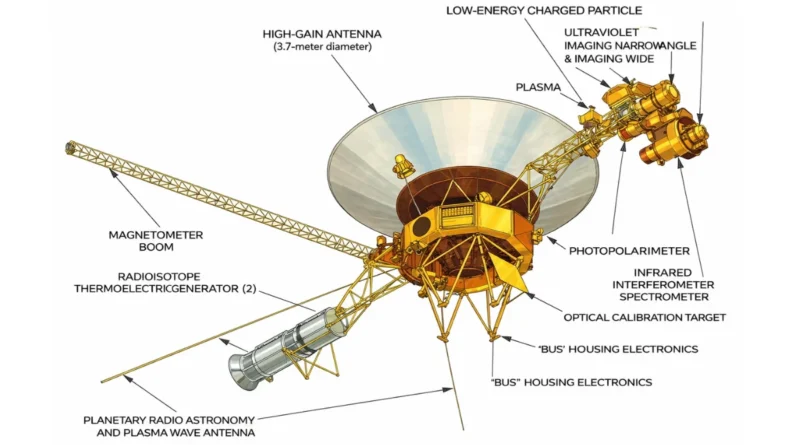
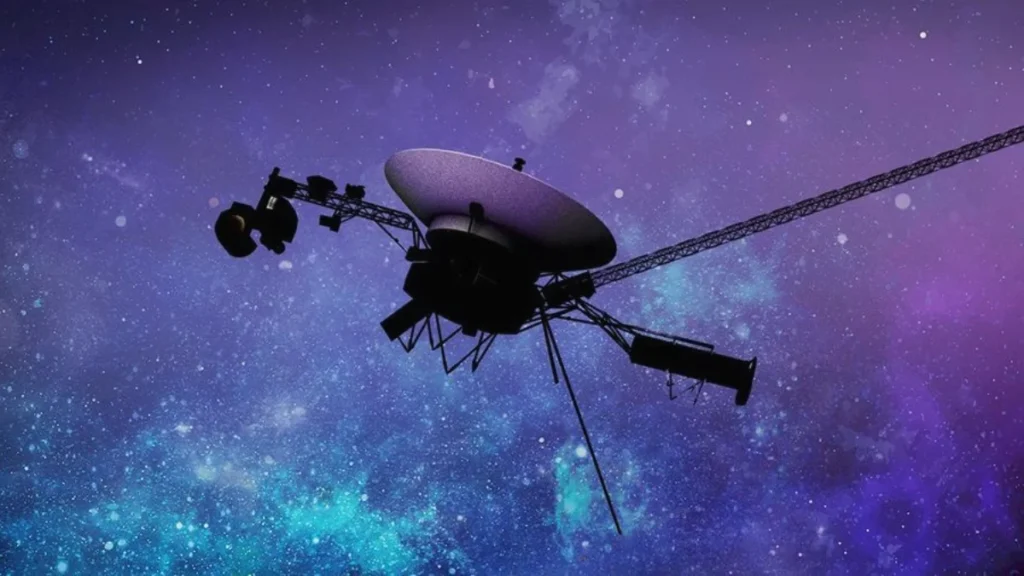
- A large 3.7-meter high-gain antenna for communication with Earth
- Scientific instrument booms extending outward
- Stabilization thrusters for navigation
- A protective electronics system capable of surviving radiation
Power Source
Unlike satellites orbiting Earth, the Voyager spacecraft could not rely on solar panels. Instead, they use radioisotope thermoelectric generators (RTGs) that convert heat from radioactive decay into electricity.
These systems have powered the spacecraft for decades, though their energy output slowly decreases over time.
Scientific Instruments
The spacecraft carried several instruments designed to study planetary environments and deep space, including:
- Imaging systems for planetary photography
- Plasma detectors
- Magnetometers
- Cosmic ray detectors
- Ultraviolet spectrometers
These tools enabled scientists to collect data about magnetic fields, charged particles, and the structure of planetary atmospheres. (NASA Jet Propulsion Laboratory (JPL))
Where is the Grand Tour of the Outer Planets?
One of the most famous phases of the Voyager Mission is the Grand Tour, during which the probes visited multiple outer planets.
Jupiter Encounter (1979)
Both Voyager spacecraft reached Jupiter in 1979, producing revolutionary Voyager discoveries.
Among the most surprising findings:
- Active volcanoes on Jupiter’s moon Io
- Previously unknown moons
- Detailed images of Jupiter’s powerful storms
These discoveries dramatically expanded scientific understanding of the Jovian system.
Saturn Encounter (1980–1981)
Voyager 1 reached Saturn in 1980, followed by Voyager 2 in 1981.
Scientists learned that Saturn’s rings were far more complex than previously thought. Voyager also revealed new moons and atmospheric phenomena within the planet’s dense cloud layers.
Uranus Flyby (1986)
Voyager 2 became the first—and still the only—spacecraft to visit Uranus.
Key discoveries included:
- New moons
- Unusual magnetic field orientation
- A cold and mysterious atmosphere
Neptune Encounter (1989)
Voyager 2’s encounter with Neptune in 1989 marked the final planetary flyby in the Voyager mission timeline.
Scientists observed:
- The Great Dark Spot, a massive storm similar to Jupiter’s Great Red Spot
- Supersonic winds in Neptune’s atmosphere
- Nitrogen geysers on the moon Triton
These discoveries transformed the understanding of the outermost giant planet.
What is The Voyager Golden Record: Humanity’s Cosmic Message
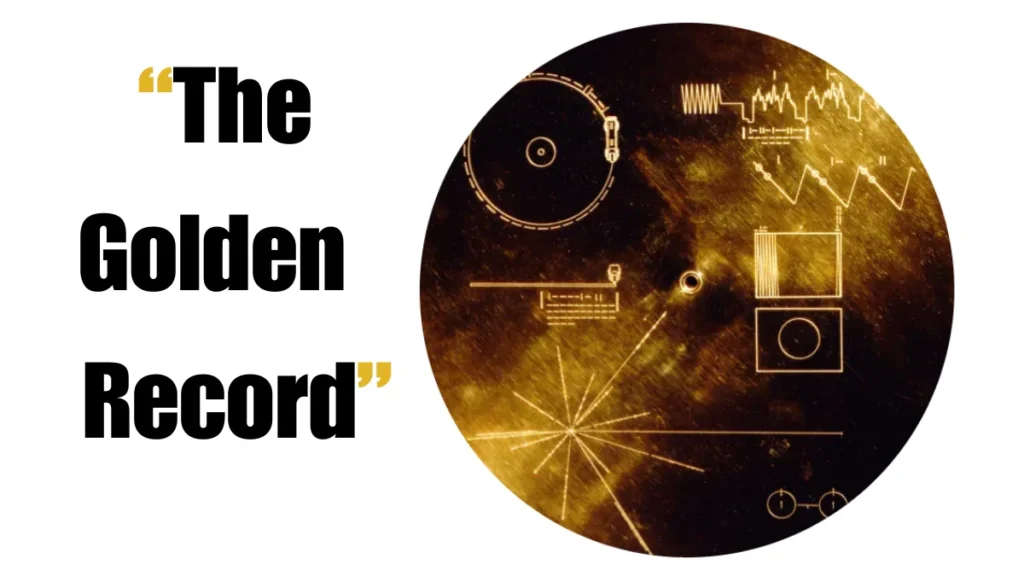
One of the most fascinating aspects of the Voyager Mission is the Voyager Golden Record, a symbolic message from humanity to the cosmos.
Why the Golden Record Was Created
Scientists believed that the spacecraft might one day be discovered by intelligent extraterrestrial civilizations. To represent Earth and humanity, they created a “cosmic time capsule.”
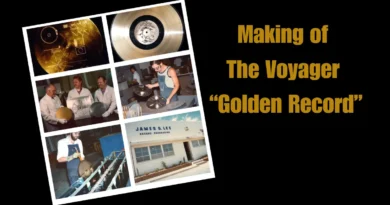
The result was a 12-inch gold-plated copper record attached to each spacecraft. (NASA Jet Propulsion Laboratory (JPL))
What the Voyager Golden Record Contains
The record includes:
- 115 images depicting life on Earth
- Recordings of Earth’s natural environment, such as blowing wind, thunder, and wildlife sounds.
- Musical pieces from many cultures
- Greetings spoken in 55 languages
- Messages from world leaders
These materials were selected by a committee led by planetary scientist Carl Sagan. (NASA Science)
The record also includes instructions explaining how to play it and information about Earth’s location in the galaxy.
Scientists often describe the Golden Record as “a message in a bottle cast into the cosmic ocean.”
The Edge of the Solar System
After completing their planetary missions, both spacecraft continued their journey toward the outer boundary of the Sun’s influence.
Understanding the Heliosphere
The Sun constantly releases a stream of charged particles known as the solar wind, creating a giant bubble called the heliosphere around the solar system.
Beyond this region lies interstellar space—the environment between stars.
Crossing the Termination Shock
As the Voyager spacecraft approached the edge of the heliosphere, it encountered the termination shock, where solar wind slows dramatically.
- Voyager 1 crossed this boundary in 2004
- Voyager 2 crossed in 2007 (NASA Science)
This region marks the beginning of the heliosheath, a turbulent zone filled with slowed solar wind particles.
When Voyager Entered Interstellar Space
One of the most important milestones in space exploration occurred when the Voyager spacecraft crossed the heliopause, the outer boundary of the Sun’s influence.
Voyager 1’s Historic Crossing
On August 25, 2012, Voyager 1 became the first human-made object to enter interstellar space. (NASA Science)
The spacecraft crossed the heliopause approximately 122 astronomical units from the Sun, roughly 11 billion miles away.
Voyager 2 Follows
Voyager 2 followed in November 2018, confirming that the heliosphere’s boundary is more complex than previously thought. (NASA Science)
Together, the probes now provide the first direct measurements of the interstellar medium.
How Far Have Voyager 1 and Voyager 2 Traveled Since Launch?
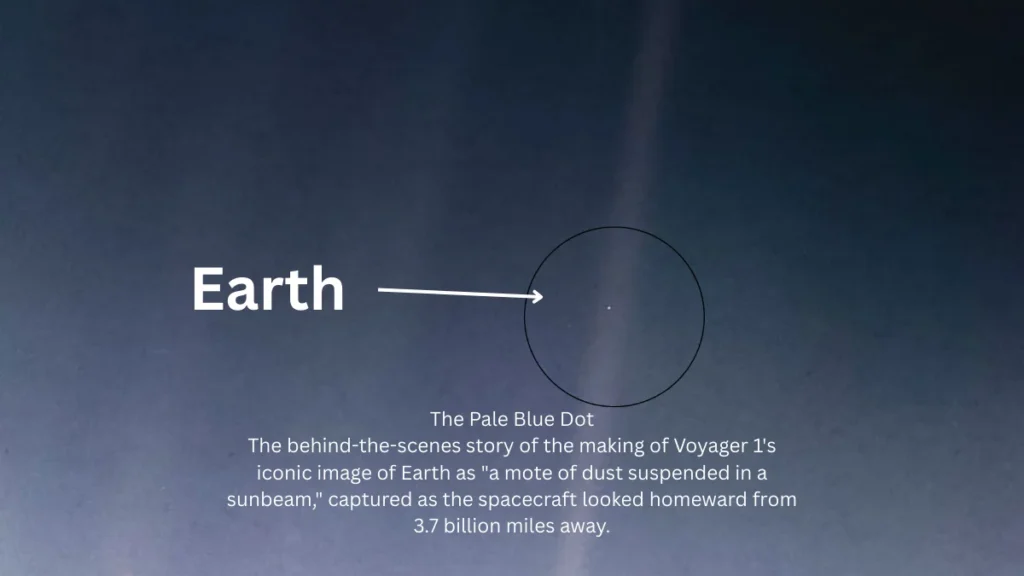
One of the most frequently asked questions about the Voyager Mission is: Where are Voyager 1 and Voyager 2 now?
Voyager 1 Distance From Earth
Voyager 1 remains the most distant human-made object in space. (NASA Jet Propulsion Laboratory (JPL))
It is currently tens of billions of kilometers from Earth, traveling outward toward the constellation Ophiuchus.
Because of this enormous distance:
- Radio signals take nearly a full day to travel between Earth and the spacecraft. (NASA)
Voyager 2 Position
Voyager 2 follows behind Voyager 1 on a different trajectory.
Both spacecraft are still sending data about the environment in Voyager interstellar space, helping scientists understand cosmic radiation and magnetic fields.
Voyager Spacecraft Current Status
Despite their age, the Voyager probes remain operational.
Power Limitations
The RTG power supply slowly decreases each year, forcing engineers to shut down non-essential instruments.
However, some scientific instruments are expected to operate into the late 2020s or early 2030s.
Recent Engineering Success
In 2025, NASA engineers successfully restarted a thruster on Voyager 1 that had been inactive for more than two decades, extending the spacecraft’s ability to maintain orientation in space. (Le Monde.fr)
This achievement demonstrated the remarkable durability of the Voyager spacecraft and the ingenuity of mission engineers.
How Far Voyager 1 Is From Earth
The immense distance between Earth and Voyager 1 highlights the scale of interstellar exploration.
Voyager 1 is now traveling through deep space so far from Earth that:
- Its signals take about 22 hours one way to reach our planet. (NASA)
At this distance, the spacecraft’s radio transmissions are incredibly faint. To receive them, NASA uses the Deep Space Network, a global array of giant radio antennas.
Scientific Discoveries From the Voyager Mission
The Voyager probes have produced countless scientific discoveries.
Some of the most important Voyager discoveries include:
Volcanic Activity on Io
Voyager 1 discovered the first active volcanoes beyond Earth on Jupiter’s moon Io.
Complex Planetary Rings
Voyager revealed the intricate structures of Saturn’s rings.
New Moons
Dozens of previously unknown moons were discovered around Jupiter, Saturn, Uranus, and Neptune.
Neptune’s Dynamic Atmosphere
Voyager 2 observed powerful storms and extreme winds on Neptune.
These discoveries revolutionized planetary science and reshaped our understanding of the solar system.
Studying the Interstellar Medium
Today, the Voyager probes continue to explore the environment between stars.
Their instruments measure:
- Cosmic ray intensity
- Plasma density
- Magnetic fields
- Interstellar particle interactions
This data provides the first direct measurements of the local interstellar medium, a region scientists previously studied only through remote observations.
The Future of the Voyager Interstellar Mission
Eventually, the Voyager spacecraft will lose the power required to operate its instruments.
Scientists estimate that meaningful scientific data could continue until around the early 2030s.
After that, the probes will continue drifting silently through space.
Over tens of thousands of years, they may pass through the distant Oort Cloud, the outermost region of the solar system.
Voyager’s Enduring Legacy
Few missions in history have matched the impact of the Voyager Mission.
The mission has become the longest-running NASA space mission, operating for nearly five decades.
Its achievements include:
- Exploring the outer planets
- Discovering new moons and planetary phenomena
- Entering interstellar space
- Carrying humanity’s message into the galaxy
Even after communication with Earth eventually ends, the Voyager spacecraft will continue traveling through space for millions of years.
FAQ Voyager Mission
What is the Voyager Mission?
The Voyager Mission is a long-running space exploration program launched by NASA in 1977 to study the outer planets and the edge of the solar system. The mission involves two robotic probes, Voyager 1 and Voyager 2, which have since traveled into interstellar space while continuing to send scientific data back to Earth.
When were Voyager 1 and Voyager 2 launched?
Voyager 2 was launched on August 20, 1977, followed by Voyager 1 on September 5, 1977. Although Voyager 2 launched first, Voyager 1 traveled faster and became the most distant human-made object in space.
When did Voyager enter interstellar space?
Voyager 1 entered interstellar space in August 2012 when it crossed the heliopause, the boundary marking the end of the Sun’s influence. Voyager 2 followed in November 2018, confirming key details about the solar system’s outer boundary.
How far is Voyager 1 from Earth?
Voyager 1 is currently the farthest human-made object from Earth, traveling billions of kilometers away in interstellar space. Signals from the spacecraft take nearly a full day to travel between Earth and the probe.
What discoveries did the Voyager spacecraft make?
The Voyager spacecraft produced numerous groundbreaking discoveries, including volcanic activity on Jupiter’s moon Io, new moons around several planets, detailed images of Saturn’s rings, and the first close-up observations of Uranus and Neptune.
What is the Voyager Golden Record?
The Voyager Golden Record is a gold-plated disc attached to both Voyager spacecraft. It contains sounds, images, and music representing life on Earth, including greetings in 55 languages, natural sounds, and cultural recordings.
Are Voyager 1 and Voyager 2 still working?
Yes. Both spacecraft continue to operate and transmit scientific data. However, their power supply slowly decreases, so engineers periodically shut down instruments to extend the mission.
How long will the Voyager spacecraft continue operating?
Scientists expect the spacecraft to continue sending data until the early 2030s. After that, they will likely lose enough power that communication with Earth will end.
What is the main goal of the Voyager interstellar mission today?
The Voyager interstellar mission aims to study the environment beyond the heliosphere, including cosmic rays, plasma waves, and magnetic fields in interstellar space.
Why is the Voyager Mission important?
The Voyager Mission is considered one of the most successful scientific missions in history. It explored the outer planets, discovered new celestial phenomena, and became the first mission to send a spacecraft into interstellar space.
How do the Voyager spacecraft communicate with Earth?
The Voyager spacecraft sends radio signals back to Earth using its high-gain antennas. These signals are received by NASA’s Deep Space Network, a global system of large radio antennas designed to communicate with distant spacecraft such as Voyager 1 and Voyager 2.
What happens if someone finds the Voyager spacecraft in the future?
If an intelligent civilization ever discovers the spacecraft, they may learn about Earth through the Voyager Golden Record. The record contains instructions on how to play it and includes images, music, and sounds representing life on Earth.
How fast are the Voyager spacecraft traveling?
Both Voyager probes travel at incredible speeds through space. Voyager 1 moves at roughly 17 kilometers per second relative to the Sun, while Voyager 2 travels slightly slower but continues moving steadily through interstellar space.
Will the Voyager spacecraft ever reach another star?
The Voyager probes are not heading toward any specific star system. However, over tens of thousands of years, they will pass near distant stars while continuing their journey through interstellar space.
Conclusion: Humanity’s First Interstellar Explorers
The Voyager Mission represents one of the greatest achievements of human ingenuity.
Launched during the Cold War era with technology far less powerful than modern smartphones, the twin spacecraft have traveled farther than any machine ever built.
They transformed our understanding of the outer planets, became humanity’s first ambassadors to the stars, and opened a new era of interstellar exploration.
As the probes continue their silent journey through the galaxy, they carry a small but powerful reminder of our planet: the sounds, music, and images of Earth etched onto a golden record.
Long after our civilization changes—or perhaps even disappears—the Voyager spacecraft will remain in the cosmos, quietly telling the story of a small world that once reached for the stars.