
Nanomedicine 2026: How AI and Smart Nanotechnology Are Transforming the Future of Healthcare
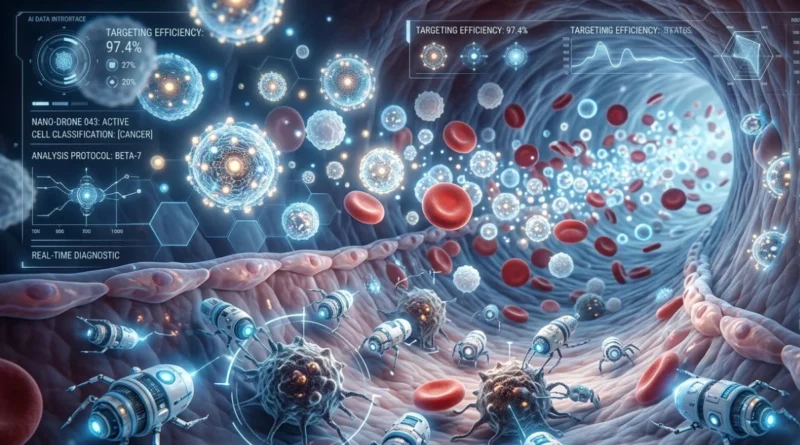
Nanomedicine 2026 marks a pivotal moment in healthcare as artificial intelligence (AI) and smart nanotechnology converge to reshape disease diagnosis, treatment, and prevention. Researchers, pharmaceutical companies, and healthcare institutions worldwide are accelerating the development of nanoscale technologies capable of operating at the molecular level within the human body.
From AI-designed nanoparticles that target tumors to nanosensors capable of detecting diseases before symptoms appear, these innovations are redefining modern medicine.
In 2026, laboratories and hospitals across North America, Europe, and Asia are advancing clinical trials and commercial applications of nanomedicine technologies designed to deliver highly precise therapies while reducing side effects.
The driving force behind this transformation is the integration of AI-driven analytics with nanoscale engineering, enabling scientists to design smarter drug carriers, more accurate diagnostic tools, and personalized treatment strategies.
With more than 1,200 nanomedicine products under development and hundreds already in use, the field is rapidly moving from experimental research to mainstream healthcare.
Real-time monitoring of critical quality attributes (CQAs) is expected to play a central role in the next phase of advanced manufacturing. Future production and development systems will incorporate a larger network of sensors—not only to track traditional critical process parameters (CPPs) but also nano-specific CQAs, including particle size and distribution. Technologies such as SR-DLS are increasingly being adopted to measure particle size continuously during production. This capability allows manufacturers to quickly adjust variables like flow rates during turbulent mixing processes—such as those used in mRNA/LNP vaccine production—helping accelerate technology transfer while lowering development risks.
According to
Albert Grau-Carbonell, InProcess-LSP Application Specialist, and Ad Gerich, CEO.
Key Developments in Nanomedicine 2026
AI-Driven Nanoparticles for Precision Drug Delivery
Traditional drug therapies often spread throughout the body, affecting both healthy and unhealthy cells. Nanoparticles—tiny materials measured in billionths of a meter—allow medications to be packaged and transported directly to targeted cells.
Artificial intelligence plays a crucial role in optimizing this process. Machine-learning algorithms analyze biological data to determine the most effective nanoparticle size, shape, and chemical composition for each treatment. Researchers say this allows drug developers to design nanomedicines with higher therapeutic efficiency and lower toxicity.
These targeted delivery systems are already being explored for several conditions, including:
- Cancer therapy
- Cardiovascular disease treatment
- Neurological disorders
- Infectious disease management
By directing drugs only to affected tissues, nanomedicine could significantly reduce the side effects commonly associated with chemotherapy and other aggressive treatments.
Nanotheranostics: Diagnosis and Treatment Combined
Another emerging trend shaping Nanomedicine 2026 is nanotheranostics, a concept that integrates diagnostics and therapy into a single nanoscale platform.
In practical terms, this means a nanoparticle could simultaneously detect disease markers, monitor disease progression, and deliver treatment in real time.
Scientists describe this as a major step toward precision medicine, where treatment decisions are based on individual biological characteristics. AI algorithms analyze imaging data and molecular signals gathered by nanosensors, helping clinicians adjust therapies based on how a patient’s body responds.
This combination of diagnosis and treatment can improve clinical outcomes by allowing physicians to intervene earlier and monitor treatment effectiveness more accurately.
Smart Nanosensors for Early Disease Detection
Early detection remains one of the most critical challenges in medicine. Many diseases—including cancer and neurodegenerative disorders—are often diagnosed only after symptoms appear, when treatment options become more limited.
Nanotechnology is changing this reality.
Advanced nanosensors can detect extremely small quantities of biomarkers—molecules that signal the presence of disease—in blood, saliva, or tissue samples. These sensors operate at the molecular level and can identify abnormalities long before conventional diagnostic tools.
Such technology has the potential to:
- Detect tumors at early stages
- Identify viral infections quickly
- Monitor chronic diseases continuously
- Track treatment effectiveness in real time
Researchers say nanoscale imaging and diagnostic technologies are improving the accuracy of disease detection while reducing the need for invasive procedures.
AI-Guided Nanorobots: The Next Frontier
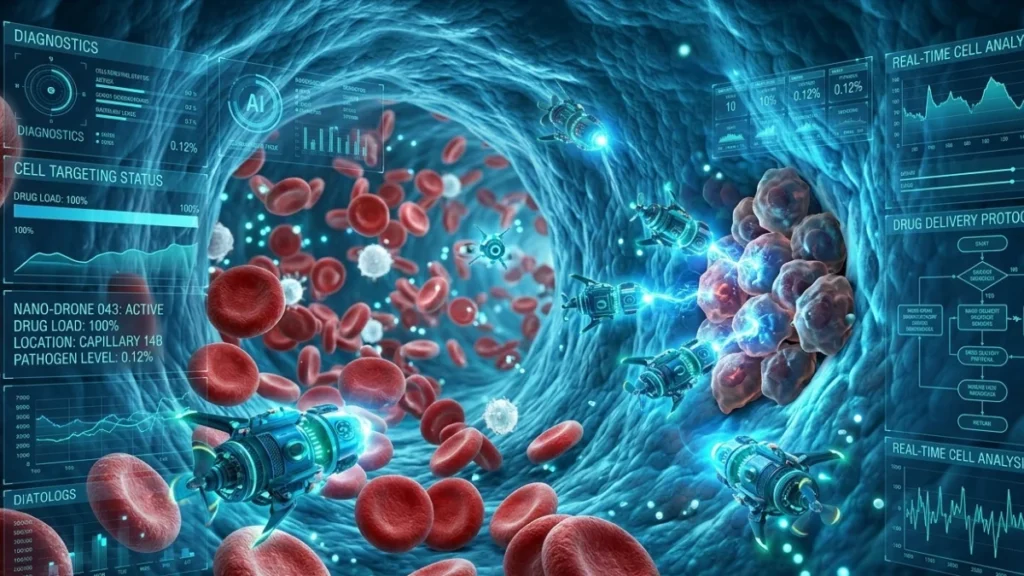
Although still largely experimental, nanorobotics represents one of the most ambitious visions of nanomedicine.
Nanorobots are microscopic machines designed to navigate inside the human body, locate diseased cells, and deliver treatment directly where it is needed. With the help of AI and machine learning, these devices could theoretically identify cancer cells, remove arterial plaque, or repair damaged tissues.
Simulation studies indicate that AI-controlled nanorobots may be capable of analyzing chemical signals within the body and autonomously navigating toward disease sites. Once there, they could release therapeutic compounds or perform micro-scale interventions.
While fully functional medical nanorobots remain in development, early prototypes demonstrate the potential for minimally invasive treatments that operate with unprecedented precision.
The Scientific Foundations of Nanomedicine
What Is Nanomedicine?
Nanomedicine refers to the application of nanotechnology in healthcare, where engineered materials at the nanoscale interact with biological systems to diagnose, monitor, and treat diseases.
Nanomaterials used in medicine include:
- Liposomes
- Polymeric nanoparticles
- Carbon nanotubes
- Metallic nanoparticles
- Quantum dots
These materials can carry drugs, enhance imaging technologies, or function as sensors that detect biological signals.
Because nanoparticles operate at the same scale as many biological structures—including proteins and DNA—they can interact with cells in ways that conventional medicines cannot. This allows for targeted therapies and highly sensitive diagnostic methods.
Self-Assembling Nanostructures and Vaccines
One promising area of nanomedicine research involves self-assembling nanoproteins (SAPNs).
These protein structures spontaneously organize into nanoscale particles that resemble viruses, enabling them to stimulate strong immune responses. Scientists believe such technology could play a significant role in next-generation vaccines.
Unlike traditional vaccine platforms, these nanoparticles can present antigens in highly organized patterns, improving immune system recognition while maintaining stability and safety.
Researchers are currently investigating SAPN-based vaccines for infectious diseases and certain cancers.
Clinical Applications Emerging in 2026
Cancer Treatment
Cancer remains one of the most active areas of nanomedicine research.
Nanoparticle-based therapies can target tumors while minimizing damage to healthy tissue. This is particularly valuable in chemotherapy, where toxic drugs often cause severe side effects.
Some nanomedicine strategies currently being explored include:
- Liposomal chemotherapy drugs
- Antibody-targeted nanoparticles
- Magnetic nanoparticles for tumor imaging
- Photothermal therapy using nanoshells
These approaches allow physicians to concentrate treatment within tumors, improving effectiveness while reducing toxicity.
Neurological Disorders
Treating brain diseases has long been complicated by the blood-brain barrier, a protective layer that prevents many drugs from entering the brain.
Nanoparticles may offer a solution by transporting therapeutic compounds across this barrier.
Recent experimental studies have even demonstrated nanoscale therapies capable of reducing toxic proteins linked to Alzheimer’s disease in animal models. These nanoparticles can restore normal brain vascular function and help clear harmful protein buildup.
Although human trials are still needed, such research highlights the potential of nanomedicine in tackling neurological disorders.
Regenerative Medicine
Nanotechnology is also influencing the field of regenerative medicine.
Nanomaterials can stimulate tissue repair, support stem cell growth, and assist in the creation of artificial tissues.
For example, nanofibers embedded with therapeutic agents can promote wound healing while releasing drugs in a controlled manner. These technologies may help treat burns, chronic wounds, and degenerative diseases.
Industry Growth and Global Investment
The rapid progress of Nanomedicine 2026 is also reflected in market growth and global investment.
According to industry analyses, the global healthcare nanotechnology market is expected to expand significantly over the next decade. In 2026 alone, the sector is estimated to be worth more than $309 billion, with steady growth projected through 2035.
Several factors are driving this expansion:
- Rising demand for precision medicine
- Advances in AI and data analytics
- Increased funding for biotechnology research
- Growing prevalence of chronic diseases
Academic institutions, biotechnology startups, and pharmaceutical companies are all investing heavily in nanomedicine research.
The influence of artificial intelligence is expected to become deeply embedded across nano-scale research and development, spanning everything from early discovery—such as identifying new antibodies or designing novel formulations—to analyzing large volumes of data generated through process analytical technologies (PAT). However, industry adoption is likely to proceed carefully. Many companies recognize that relying on unproven AI models for critical decisions in drug development could create clinical risks and trigger concerns among investors.
Consequently, the most impactful advancements in 2026 are expected to emerge from data-intensive, AI-assisted nanotechnology workflows that still maintain strong human supervision. This balanced approach aims to accelerate innovation while ensuring the development of nanomedicines remains safe, reliable, and scientifically rigorous.
Albert Grau-Carbonell, InProcess-LSP Application Specialist, and Ad Gerich, CEO.
Expert Perspectives on Nanomedicine 2026
Scientists and healthcare experts widely agree that the convergence of AI and nanotechnology represents a turning point for modern medicine.
Researchers working in nanomedicine emphasize that AI enables scientists to process vast biomedical datasets and design optimized nanomaterials more efficiently than traditional trial-and-error approaches.
According to recent scientific reviews, AI-enabled nanomedicine platforms are accelerating innovation in drug development, bioimaging, and personalized therapies.
Industry conferences and research forums in 2026 are increasingly focused on the role of nanotechnology in healthcare transformation. Experts are discussing topics ranging from targeted cancer therapies to nanoscale diagnostic devices capable of detecting diseases earlier than ever before.
However, many researchers caution that translating laboratory breakthroughs into clinical treatments will require careful testing and regulatory oversight.
Challenges and Ethical Considerations
Despite its promise, Nanomedicine 2026 also faces significant scientific, regulatory, and ethical challenges.
Nanotoxicity and Safety
Because nanoparticles interact closely with biological tissues, researchers must carefully evaluate potential toxicity.
Some nanoparticles can accumulate in organs or trigger immune responses, raising concerns about long-term safety.
Scientists are therefore developing biodegradable nanomaterials that naturally break down after completing their therapeutic function.
Regulatory Approval
Regulatory agencies must also adapt existing frameworks to evaluate nanomedicine products.
Traditional drug approval processes may not fully address the unique properties of nanoscale therapies, creating challenges for regulators and pharmaceutical companies alike.
Accessibility and Equity
Another concern is ensuring that advanced nanomedicine technologies remain accessible to patients worldwide.
Without careful policy planning, expensive high-tech therapies could widen healthcare inequalities between developed and developing regions.
The Broader Implications for Healthcare
The long-term implications of Nanomedicine 2026 extend far beyond individual treatments.
Experts believe nanotechnology could transform healthcare systems in several ways:
1. Personalized Medicine
Treatments tailored to each patient’s genetic profile and disease characteristics could become standard practice.
2. Preventive Healthcare
Continuous monitoring through nanosensors could detect diseases early, allowing preventive interventions before symptoms appear.
3. Minimally Invasive Therapies
Nanoscale treatments may reduce the need for surgery and other invasive procedures.
4. Data-Driven Medicine
AI systems integrated with nanosensors could provide physicians with real-time health data, improving clinical decision-making.
Together, these advances may redefine how healthcare is delivered over the coming decades.
The Road Ahead
As 2026 unfolds, the integration of AI with nanotechnology is pushing medicine toward a new technological frontier.
Researchers envision a future where nanoscale systems continuously monitor health, deliver personalized therapies, and even repair damaged cells at the molecular level.
While many of these technologies remain in early stages of development, the progress already achieved suggests that nanomedicine will play a central role in the next generation of healthcare innovation.
From AI-designed drug carriers to smart nanosensors capable of detecting diseases before symptoms appear, Nanomedicine 2026 represents more than a scientific trend—it signals the beginning of a new era in medicine.
