
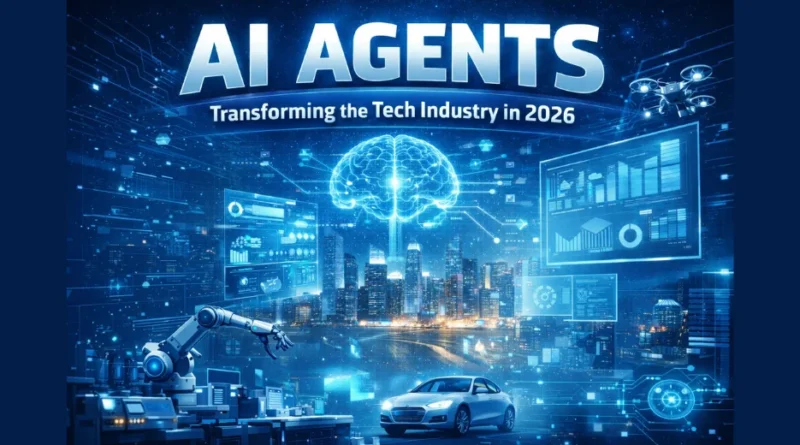
AI Agents Are Emerging as the Next Wave of Artificial Intelligence in 2026
AI agents are quickly becoming one of the most important developments in artificial intelligence in 2026. Unlike traditional AI tools that respond to prompts, these intelligent systems are designed to perform tasks independently, analyze information, and complete complex workflows with minimal human input.
As companies accelerate their digital transformation, the rise of AI agents signals a significant shift in how artificial intelligence will be utilized in workplaces, technology platforms, and everyday digital services.
Industry experts believe that AI agents could soon become essential tools for businesses, helping organizations automate tasks, improve efficiency, and unlock new levels of productivity.
What Are AI Agents?
Understanding Autonomous Artificial Intelligence
Companies across multiple industries are increasingly integrating AI-powered solutions into their operations. Unlike conventional AI tools that require direct commands, these systems can plan actions, gather information, and execute tasks based on a specific goal.
In simple terms, an AI agent acts like a digital worker capable of handling responsibilities that would normally require human effort. For example, an AI agent tasked with research could collect information from various sources, analyze trends, and generate a detailed report without needing constant instructions.
The concept is built on advanced machine learning and natural language processing technologies, which allow AI agents to understand context and make decisions.
How AI Agents Differ From Traditional AI Tools
Traditional AI tools generally function reactively. They respond to queries or prompts but do not actively manage tasks.
AI agents, however, can take initiative. After receiving an objective, they can determine the steps required to achieve the goal and perform actions independently.
This shift from reactive AI to autonomous systems is one of the key reasons why AI agents are attracting significant attention from researchers, developers, and technology companies.
Why AI Agents Are Gaining Momentum in 2026
Advances in Large Language Models
One major reason for the rapid growth of AI agents is the advancement of large language models. These powerful AI systems enable machines to understand human instructions, generate natural responses, and perform complex reasoning tasks.
Companies like OpenAI have made significant progress in developing AI models that can process massive amounts of information and respond intelligently to a wide range of prompts.
These technological breakthroughs provide the foundation for AI agents to operate more independently and perform sophisticated tasks.
Demand for Automation Across Industries
The rising need for automation is another major reason behind the increasing adoption of AI agents. Companies in various sectors are actively seeking technologies that can streamline operations and minimize the manual work required in daily processes.
AI agents can take over a variety of routine activities, including scheduling meetings, organizing data, generating reports, and responding to customer queries. By assigning these repetitive tasks to intelligent systems, businesses can free up their workforce to concentrate on more strategic and creative responsibilities.
As organizations continue to pursue greater efficiency and productivity, AI agents are quickly emerging as a practical and appealing solution for modern workplaces.
How Major Tech Companies Are Investing in AI Agents
Role of OpenAI in AI Agent Development
Leading tech firms are pouring substantial resources into advancing AI agent technology. For instance, OpenAI is exploring ways to transform conversational AI systems into autonomous digital assistants capable of performing multi-step tasks.
The goal is to enable AI systems to move beyond simple chat-based interactions and actively assist users with complex workflows such as research, planning, and content generation.
Such progress is likely to expand the practical role of artificial intelligence across many industries.
AI Innovations From Google and Microsoft
Other major technology companies are also advancing AI agent capabilities. Google has been integrating advanced artificial intelligence features across its services, aiming to create more intelligent digital assistants and automated tools.
Meanwhile, Microsoft is embedding AI-powered assistants into productivity platforms, enterprise software, and cloud-based systems.
These efforts highlight how competition among tech giants is accelerating innovation in AI agent technology.
Real-World Applications of AI Agents
Business Automation
One of the most practical uses of AI agents today is in business automation. Organizations can implement these intelligent systems to manage repetitive tasks such as entering data, processing documents, and preparing internal reports.
By automating these routine activities, companies can lower operational expenses while increasing efficiency across different departments.
Customer Support and Digital Assistants
Customer support is another area where AI agents are demonstrating strong potential. Compared to traditional chatbots, AI agents are capable of understanding more complex customer requests and delivering tailored responses.
These systems can retrieve information from internal databases, review customer interaction histories, and address issues independently, reducing the need for constant human involvement.
Software Development and Research
AI agents are also beginning to play a role in software development and technical research. Developers are using AI-powered assistants to write code, identify bugs, and suggest improvements to software projects.
In research environments, AI agents can gather large volumes of data, summarize findings, and generate insights, helping professionals save time and focus on strategic tasks.
Challenges and Concerns Around AI Agents
Security and Ethical Considerations
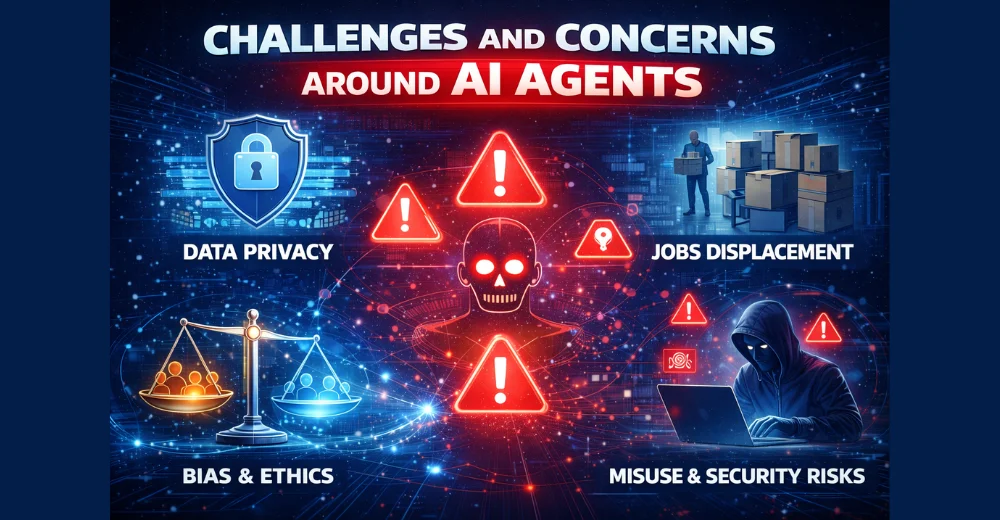
Despite their potential, AI agents raise important security and ethical concerns. Because these systems can access information and interact with digital platforms, organizations must ensure that they operate within secure frameworks.
Data protection, transparency, and responsible AI development are becoming key priorities for companies deploying AI technologies.
The Risk of Over-Automation
Another issue often discussed is the potential for excessive automation. While AI agents can significantly boost efficiency and streamline workflows, relying too heavily on automated systems may limit human supervision and decision-making.
Experts suggest that the best approach is to use AI agents as tools that complement human expertise rather than replace it entirely.
The Future of AI Agents in the Global Tech Industry
The rapid evolution of AI agents suggests that they could soon become a core component of the digital economy. As technology continues to improve, these systems may become capable of handling increasingly complex tasks across multiple industries.
From corporate workflows to research environments, AI agents are poised to change the way humans engage with technology.
While challenges remain, the momentum behind AI development indicates that autonomous systems will play a major role in the future of artificial intelligence.
As 2026 unfolds, AI agents are emerging not just as a technological trend but as a powerful force shaping the next generation of digital innovation.