Nokia 9000 Communicator: The First True Smartphone That Changed Mobile History
In 1996, long before touchscreens and app stores became standard, a device arrived that quietly reshaped the direction of mobile technology. The Nokia 9000 Communicator was not just another mobile phone — it was a bold attempt to merge telephony with computing power. At a time when most phones were limited to voice calls and basic SMS, this device offered email, web browsing, document editing, and even fax capabilities.
Today, it is widely regarded as one of the earliest true smartphones. But to understand why the Nokia 9000 Communicator was so revolutionary, we must step back into the mid-1990s mobile landscape.
The Mobile Industry in 1996: A Different World
In 1996, mobile phones were primarily communication tools for voice calls. Devices were bulky, battery life was limited, and SMS was still emerging as a popular feature. The concept of carrying a pocket-sized computer was largely confined to science fiction or niche personal digital assistants (PDAs).
Internet access on a mobile device was almost unheard of. Data speeds were extremely slow under GSM networks, and wireless infrastructure was still developing globally. Business professionals relied heavily on desktop computers, fax machines, and physical paperwork to manage daily operations.
It was in this environment that Nokia introduced something radically different — a device that combined a mobile phone with a mini computer.
A Design That Broke the Mold
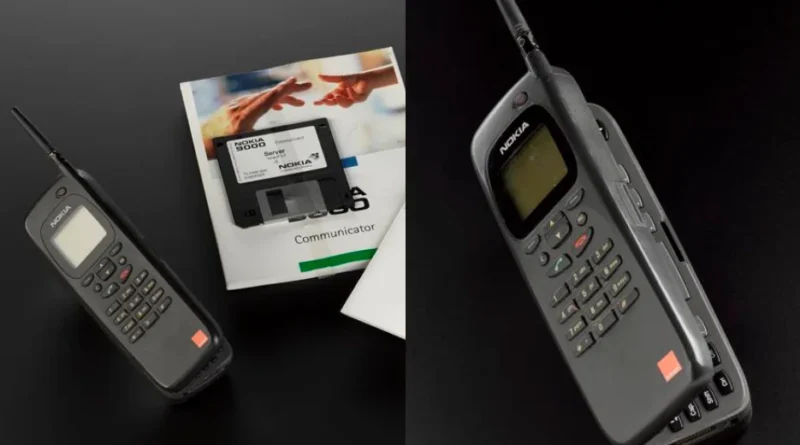
One of the defining features of the Nokia 9000 Communicator was its clamshell design. From the outside, it looked like a relatively conventional mobile phone with a small monochrome screen and numeric keypad. However, opening the device revealed its true purpose.
Inside was a wide 640 × 200 monochrome LCD in landscape orientation and a full QWERTY keyboard. This layout resembled a miniature laptop more than a traditional phone. The keyboard enabled efficient typing for emails, notes, and documents — something nearly impossible on numeric keypads.
At approximately 397 grams, it was heavy by modern standards. But in the context of the 1990s, the size reflected the technological ambition packed inside. The build quality was solid, professional, and clearly targeted at business users rather than casual consumers.
Technical Specifications That Were Ahead of Their Time
The Nokia 9000 Communicator was powered by an Intel 386 processor running at 24 MHz. While that may sound modest today, integrating a PC-class processor into a mobile device in 1996 was groundbreaking.
It operated on the GEOS (Graphical Environment Operating System), which allowed multitasking and application support beyond basic phone functions.
The device included:
- 8 MB total memory
- 4 MB for applications
- 2 MB for user storage
- 2 MB for system operations
- 4 MB for applications
- GSM 900 MHz network support
- Infrared connectivity for data transfer
- Fax modem functionality
These specifications positioned the Nokia 9000 Communicator as more than a communication device — it was a portable productivity tool.
Features That Redefined Mobile Productivity
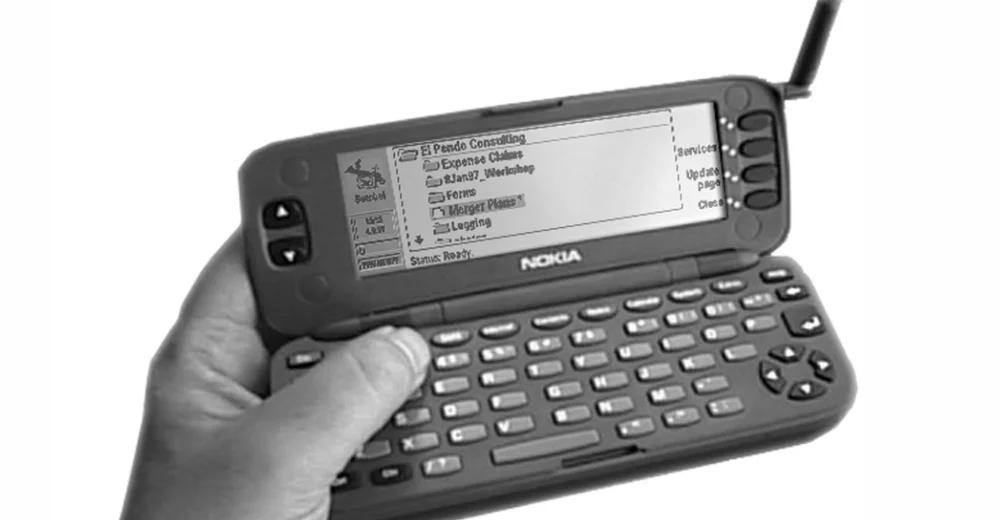
The Nokia 9000 Communicator introduced features that would later become standard in smartphones:
Email on the Go
Users could send and receive emails directly from the device. In an era when most professionals relied on desktop email access, this was transformative. Business executives could stay connected while traveling, dramatically improving response times.
Web Browsing
Though limited by slow GSM data speeds, the device supported basic web access. This marked one of the earliest examples of mobile internet capability integrated into a phone.
Document Creation
The built-in word processor and spreadsheet applications allowed users to draft reports, review documents, and manage numerical data. For traveling professionals, this eliminated the need to carry separate computing devices.
Fax Capabilities
Fax was still widely used in corporate environments during the 1990s. The ability to send and receive faxes directly from a handheld device added significant business value.
Calendar and Contacts
Integrated scheduling and contact management enhanced its appeal as an all-in-one business assistant.
These functions may seem ordinary today, but in 1996, they were revolutionary.
Target Audience: Built for Business Professionals
The Nokia 9000 Communicator was not designed for the mass consumer market. It was priced at a premium and positioned as a corporate communication tool.
Executives, consultants, and international business travelers were the primary audience. For them, the device offered mobility and productivity that previously required multiple tools — a mobile phone, a PDA, and a laptop.
This strategic focus on enterprise users laid the groundwork for later business-oriented devices such as the BlackBerry 850, which would dominate corporate mobile communication at the turn of the millennium.
Limitations and Challenges
Despite its innovation, the Nokia 9000 Communicator faced several practical challenges.
Weight and Size
At nearly 400 grams, it was heavy and bulky compared to standard mobile phones of the era.
Slow Data Speeds
GSM data transmission was slow, making web browsing and email synchronization time-consuming.
Battery Life
Running advanced applications consumed significant power, limiting usage time.
High Cost
The device was expensive, restricting adoption primarily to corporate environments.
Nevertheless, these limitations were largely technological constraints of the time rather than design flaws.
Influence on Future Smartphones
The Nokia 9000 Communicator did not achieve mainstream consumer dominance, but its influence was profound.
It directly inspired subsequent models in the Communicator series, including the Nokia 9210 Communicator, which improved processing power and introduced color displays.
More broadly, it helped establish several smartphone fundamentals:
- Integrated email communication
- On-device document editing
- Business-centric mobile applications
- Full QWERTY keyboard usability
These elements would later appear in devices such as the iPhone, albeit in a different form factor and user interface paradigm.
While the iPhone popularized touchscreen smartphones for mass consumers, the Nokia 9000 Communicator demonstrated more than a decade earlier that mobile devices could function as portable computers.
The Nokia 9000 Communicator Legacy
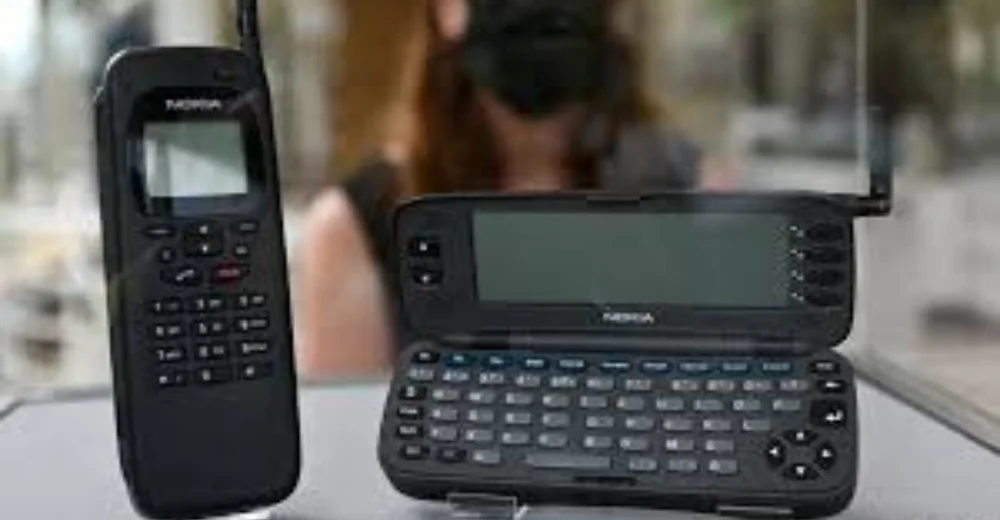
The Communicator series became a symbol of advanced mobile productivity in the late 1990s and early 2000s. Nokia’s willingness to experiment with hybrid devices reflected a forward-thinking corporate strategy.
Although the smartphone market would eventually shift toward touch interfaces and app ecosystems, the Nokia 9000 Communicator proved that mobile devices could extend beyond voice communication.
Its impact can be seen in:
- Modern email clients on smartphones
- Integrated productivity suites
- Business-focused mobile security features
- The expectation that phones can replace laptops for many tasks
In many ways, it predicted the convergence of communication and computing that defines today’s digital lifestyle.
Why the Nokia 9000 Communicator Still Matters in 2026
Three decades after its release, the Nokia 9000 Communicator remains an important milestone in technology history.
Collectors value it as a pioneering device. Tech historians recognize it as one of the first practical implementations of smartphone functionality. For enthusiasts, it represents an era of experimentation when manufacturers were redefining what mobile devices could become.
The device serves as a reminder that innovation often precedes mass adoption by many years. While modern smartphones are exponentially more powerful, their conceptual roots can be traced back to early hybrid devices like this one.
A Vision Ahead of Its Time
The Nokia 9000 Communicator was not merely a product; it was a vision. In 1996, it challenged the conventional understanding of what a mobile phone could do. By integrating email, web browsing, document editing, and fax capabilities into a single portable device, it laid the foundation for the smartphone revolution.
Though limited by the technology of its era, the Nokia 9000 Communicator proved that mobile computing was not just possible — it was inevitable.
Today’s smartphones may feature high-resolution touchscreens, cloud connectivity, and AI-powered applications, but the blueprint for combining communication and computing was drawn decades ago.
And at the center of that blueprint was the Nokia 9000 Communicator — a device that truly changed mobile history.
(FAQ) About the Nokia 9000 Communicator
What is the Nokia 9000 Communicator?
The Nokia 9000 Communicator is a business-focused mobile device released in 1996. It combined a GSM mobile phone with computing features such as email, web browsing, document editing, and fax capabilities, making it one of the earliest true smartphones.
When was the Nokia 9000 Communicator released?
The Nokia 9000 Communicator was officially launched in 1996. It debuted during a period when most mobile phones were limited to voice calls and SMS messaging.
Why is the Nokia 9000 Communicator considered one of the first smartphones?
The device is considered one of the first smartphones because it integrated communication and computing functions in a single handheld unit. Unlike traditional phones of its era, it offered email access, internet browsing, a word processor, spreadsheets, and a full QWERTY keyboard.
What operating system did the Nokia 9000 Communicator use?
The Nokia 9000 Communicator ran on the GEOS (Graphical Environment Operating System). This operating system enabled multitasking and supported productivity applications beyond basic phone features.
Did the Nokia 9000 Communicator have internet access?
Yes, the Nokia 9000 Communicator supported basic web browsing over GSM networks. Although data speeds were slow by modern standards, it allowed users to access online content and send emails from virtually anywhere with network coverage.
Who was the Nokia 9000 Communicator designed for?
The device was primarily targeted at business professionals and corporate executives. Its features were tailored for productivity, remote communication, and document management, making it ideal for professionals who traveled frequently.
How much did the Nokia 9000 Communicator weigh?
The Nokia 9000 Communicator weighed approximately 397 grams. While heavy compared to modern smartphones, its size reflected the advanced hardware and full keyboard design included in the device.
How did the Nokia 9000 Communicator influence future smartphones?
The Nokia 9000 Communicator set the foundation for future mobile devices by proving that phones could function as portable computers. Later devices, such as the Nokia 9210 Communicator and eventually mainstream smartphones like the iPhone, built upon the concept of integrating communication, productivity tools, and internet access into a single device.
Is the Nokia 9000 Communicator still usable today?
While it may still power on as a collector’s item, modern GSM networks and internet infrastructure have evolved significantly. As a result, the Nokia 9000 Communicator is now primarily valued for historical and collectible purposes rather than everyday use.
Why is the Nokia 9000 Communicator important in mobile history?
The Nokia 9000 Communicator represents a turning point in mobile technology. It demonstrated that handheld devices could support advanced communication and productivity functions, influencing the development of the modern smartphone industry.