The Supreme Court said no, but Trump has imposed a new 10% tariff on global imports
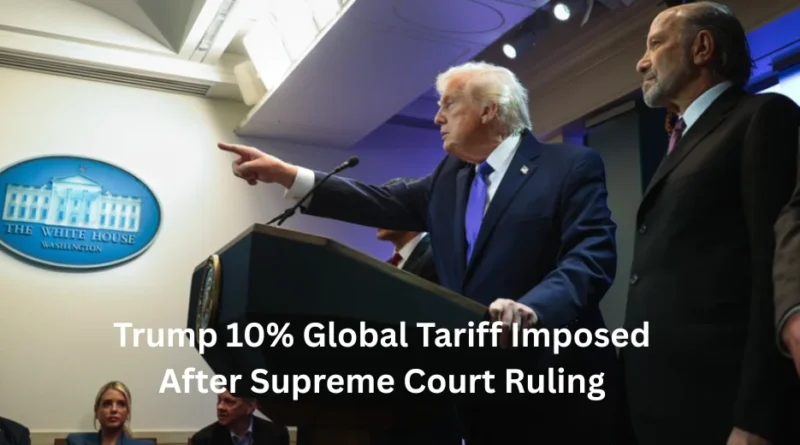
US President Donald Trump has announced a Trump 10% global tariff, replacing a sweeping set of import duties that were struck down by the Supreme Court. The president criticized the ruling as “terrible” and sharply rebuked the justices who rejected his previous trade measures, calling their decision misguided.
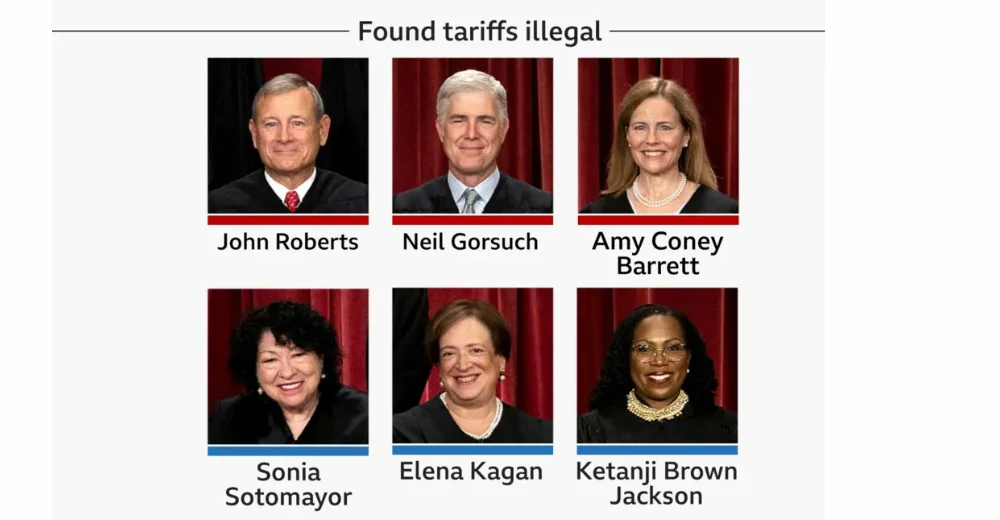
The announcement came just hours after the court invalidated most of the global tariffs introduced by the White House last year. In a 6-3 decision, the Supreme Court determined that the president had exceeded his constitutional authority in imposing the broad-based import taxes.
The ruling marked a significant legal and economic moment, opening the possibility of billions of dollars in tariff refunds while simultaneously creating new uncertainty in US trade policy and global markets.
Speaking from the White House, Trump indicated that businesses expecting refunds should prepare for prolonged litigation. He warned that legal battles could stretch on for years and made clear that his administration would pursue alternative legal pathways to maintain its trade strategy.
“We have alternatives — great alternatives — and we’ll be a lot stronger for it,” Trump said.
Supreme Court Tariff Ruling and Limits on Presidential Trade Powers
The legal dispute centered on import taxes imposed last year on goods from nearly every major trading partner. Initially targeting Mexico, Canada, and China, the measures expanded to dozens of countries under what Trump described as “Liberation Day” tariffs.
The White House had relied on the International Emergency Economic Powers Act (IEEPA), a 1977 statute granting the president authority to regulate economic transactions during national emergencies. However, challengers argued that the statute did not explicitly authorize the imposition of tariffs.
Lawyers representing US states and small businesses contended that Congress never delegated its taxation authority in such sweeping terms. They emphasized that the statute made no direct reference to tariffs and did not grant the executive branch open-ended power to override established trade agreements.
Chief Justice John Roberts, writing for the majority, agreed. He stated that when Congress delegates tariff authority, it does so explicitly and under clearly defined limitations. If lawmakers had intended to give the president such extraordinary powers, they would have stated so directly.
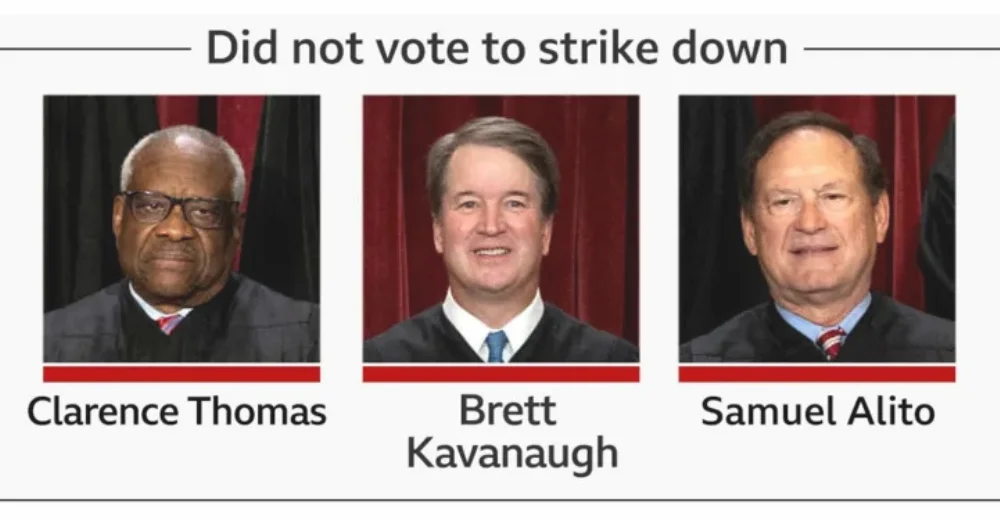
The majority opinion was joined by the court’s three liberal justices as well as two conservative justices appointed by Trump — Amy Coney Barrett and Neil Gorsuch. Justices Clarence Thomas, Brett Kavanaugh, and Samuel Alito dissented.
Trump expressed frustration at what he described as disloyalty among Republican-appointed justices who sided against his administration’s trade policy decision.
Economic Impact of Trump 10% Global Tariff on Businesses and Markets
Despite the legal setback, financial markets responded positively to the Supreme Court’s ruling. The S&P 500 rose approximately 0.7%, reflecting cautious optimism among investors.
Many businesses welcomed the court’s decision. Beth Benike, owner of Busy Baby products in Minnesota, said she felt significant relief. Her company, which manufactures in China, had faced sharply higher import costs under the previous tariff structure.
Nik Holm, chief executive of Terry Precision Cycling, also described the ruling as a relief but acknowledged that restoring disrupted supply chains would take time. He expressed hope that improperly collected duties would eventually be refunded.
However, economists warn that the anticipated financial relief may not materialize quickly. Diane Swonk, chief economist at KPMG US, cautioned that prolonged litigation could make it difficult for smaller firms to recover funds.
The US has already collected at least $130 billion in tariffs under IEEPA authority. Hundreds of companies — including retailer Costco, aluminum producer Alcoa, and food importer Bumble Bee — have filed lawsuits seeking refunds.
Notably, the Supreme Court’s decision did not directly address the mechanics of refunds, likely leaving that issue to the Court of International Trade.
Section 122 and the New 10% Tariff on Imports
In response to the ruling, Trump signed a proclamation invoking Section 122 of the Trade Act, a rarely used provision that allows the president to impose tariffs of up to 15% for 150 days. Under this authority, the Trump 10% global tariff will take effect on 24 February.
Section 122 requires congressional involvement after 150 days, potentially setting up another political battle over US import duties.
The new tariff order includes several exemptions. Certain minerals, natural resources, fertilizers, pharmaceuticals, specific electronics, agricultural products such as oranges and beef, and some vehicle categories are excluded. However, the language outlining exemptions is broad and leaves room for interpretation.
Canada and Mexico retain exemptions under the United States-Mexico-Canada Agreement (USMCA), covering most goods traded within North America.
A White House official confirmed that countries with recently negotiated trade agreements — including the United Kingdom, India, and the European Union — will now face the universal 10% tariff rate rather than previously negotiated rates. The administration expects those countries to continue honoring concessions agreed upon in earlier trade deals.
Alternative Trade Tools: Section 232 and Section 301 Measures
Analysts expect the administration to explore additional statutory authorities, including Section 232 and Section 301.
Section 232 allows tariffs to address national security concerns, while Section 301 targets unfair trade practices. Trump previously used these tools to impose tariffs on steel, aluminum, and automobiles — measures unaffected by the Supreme Court ruling.
Geoffrey Gertz, senior fellow at the Center for a New American Security in Washington, said the situation has grown increasingly complex.
“Things have only gotten more complicated and messier today,” he said.
Reaction from major trading partners was measured. A spokesperson for the European Commission said officials were reviewing the ruling carefully.
Legal Uncertainty and the Future of US Trade Policy
The broader implications of the Trump 10% global tariff remain uncertain. Justice Brett Kavanaugh, in dissent, warned that the ruling could create administrative and financial complications.
Legal experts suggest that unless the government establishes a streamlined refund process, companies may need to file individual lawsuits to recover funds. Steve Becker, head of law firm Pillsbury, said businesses are likely to eventually recover their money but warned that timelines depend heavily on government procedures.
The dispute underscores ongoing tensions over executive power in US trade policy. While presidents historically wield broad authority in trade matters, the Supreme Court’s ruling reinforces constitutional limits on tariff authority and congressional oversight.
For now, the 10% tariff on imports represents a recalibrated approach rather than a retreat from protectionist policies. Whether it withstands future legal scrutiny — and how global markets respond — will shape the next phase of US international trade strategy.
As businesses await clarity on refunds and exemptions, one reality is clear: the battle over presidential tariff authority is far from over.