Africa Boycotts FIFA World Cup 2026 in Protest Over Gaza Conflict
The debate over whether Africa Boycotts FIFA World Cup 2026 has intensified as political and humanitarian tensions surrounding the United States and the Gaza conflict continue to grow.
On January 6, a group of 25 British members of parliament tabled a motion urging global sporting authorities to reconsider the United States as host of the FIFA World Cup 2026 until it demonstrates compliance with international law. The move followed mounting criticism across Europe regarding the political atmosphere surrounding a tournament intended to symbolize unity and international cooperation.
Dutch broadcaster Teun van de Keuken supported a public petition calling for withdrawal from the competition, while French parliamentarian Eric Coquerel warned that participation could risk legitimising policies he argues undermine international human rights standards.
Political Scrutiny Surrounding the 2026 Tournament
Much of the international scrutiny has focused on US President Donald Trump’s immigration enforcement policies and civil liberties concerns. In January, the deaths of Minneapolis residents Renee Nicole Good and Alex Pretti during immigration enforcement operations triggered nationwide protests. Reports indicate that at least eight individuals have been shot by federal immigration agents or died in immigration detention in 2026 alone.
While these developments sparked domestic controversy, critics argue that the broader concern lies in US foreign policy—particularly its role in the ongoing war in Gaza.
For decades, Washington has been Israel’s closest international ally, providing diplomatic backing and approximately $3.8 billion annually in military assistance. Opponents claim that this partnership directly shapes the military operations unfolding in the Palestinian territories.
Gaza Conflict and the Humanitarian Crisis
Since fighting erupted on October 7, 2023, Israeli military operations have resulted in the deaths of more than 72,032 Palestinians and left 171,661 others injured, and widespread damage has affected housing, hospitals, schools, and water infrastructure. Nearly 90 percent of Gaza’s population has been displaced, many multiple times.
In the occupied West Bank, intensified raids, farmland seizures, and movement restrictions have compounded instability across cities such as Jenin, Nablus, Hebron, and the Jordan Valley.
According to many international observers and rights groups, the scale of devastation raises profound legal and moral questions. It is within this context that the argument that Africa Boycotts FIFA World Cup 2026 is framed not merely as a political gesture but as a moral stand.
Historical Precedent: Africa’s 1976 Olympic Boycott
Africa’s political memory includes a powerful precedent. In 1976, following New Zealand’s rugby tour of apartheid South Africa, 22 African nations withdrew from the Montreal Olympic Games after the International Olympic Committee declined to sanction New Zealand.
That decision came just weeks after the Soweto uprising, where hundreds of schoolchildren protesting apartheid education policies were killed by police. The African withdrawal reshaped global perception of apartheid and accelerated international isolation of the South African regime.
More than 700 athletes forfeited their Olympic dreams. Countries such as Nigeria, Ghana, Zambia, Morocco, Cameroon, Tunisia, and Egypt withdrew mid-competition. Though costly, the boycott sent a clear message: participation would grant legitimacy to systemic injustice.
Supporters of the movement calling for Africa Boycotts FIFA World Cup 2026 argue that history demonstrates how collective withdrawal can shift global attention and reshape political narratives.
Moral Responsibility and Global Sports
International sporting tournaments are not merely athletic events; they are powerful political symbols. The 2026 World Cup is scheduled to be hosted across 16 cities in the United States, Canada, and Mexico from June to July. It is expected to draw billions of viewers worldwide.
Critics question whether football can present itself as a celebration of unity while large-scale humanitarian crises persist.
The argument that Africa Boycotts FIFA World Cup 2026 suggests that participation could be interpreted as tacit approval of US foreign policy in Gaza. A coordinated withdrawal, proponents argue, would force sponsors, organizers, and international audiences to confront uncomfortable realities.
Boycotts do not immediately end wars, but they remove the illusion of neutrality.
African Nations and Potential Coordination
If Africa Boycotts FIFA World Cup 2026, it would require coordinated decisions by qualified teams such as Morocco, Senegal, Algeria, Tunisia, Egypt, Ivory Coast, Ghana, Cape Verde, and South Africa. Support from the African Union and the Confederation of African Football would likely be essential.
The consequences would be immediate:
- The tournament’s claim of global inclusivity would weaken.
- Corporate sponsors could face reputational pressure.
- Media coverage would shift toward the political implications of the withdrawal.
The historical lesson of 1976 demonstrates that such decisions demand political courage and unity.
FIFA’s Political Neutrality Questioned
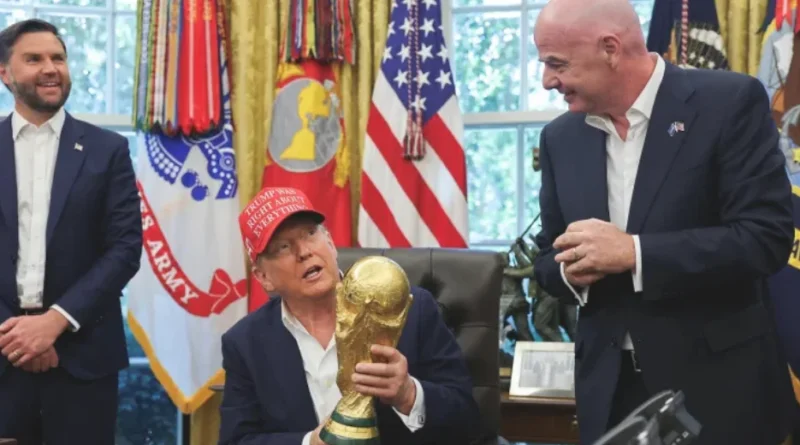
Controversy has also surrounded FIFA’s leadership. At the World Cup draw in Washington, DC, on December 5, FIFA president Gianni Infantino awarded US President Donald Trump a symbolic “peace prize,” praising efforts to promote unity.
Critics argue that such gestures blur the line between neutrality and political endorsement. If Africa Boycotts FIFA World Cup 2026, supporters contend it would challenge what they see as institutional contradictions within global football governance.
The Broader Ethical Debate
The core question extends beyond sport. It concerns whether participation in global tournaments during periods of intense humanitarian crisis reinforces or challenges existing power structures.
In Gaza, families continue to endure displacement, infrastructure collapse, and limited humanitarian access. International coverage has shown widespread destruction and civilian suffering. Advocates of withdrawal believe symbolic action can amplify global awareness.
Opponents of a boycott, however, argue that sports should remain separate from politics and that engagement fosters dialogue rather than division.
The debate over whether Africa Boycotts FIFA World Cup 2026 ultimately reflects a broader tension between moral protest and sporting tradition.
What Would a Boycott Achieve?
Historically, boycotts have served three primary functions
- Visibility – Redirecting global attention toward injustice.
- Legitimacy Withdrawal – Denying symbolic approval to host governments.
- Collective Signaling – Demonstrating unity among participating nations.
In 1976, the Olympic boycott did not immediately dismantle apartheid, but it accelerated diplomatic isolation and expanded international solidarity movements.
Supporters argue that if Africa Boycotts FIFA World Cup 2026, it could similarly intensify scrutiny of US policy in Gaza and reshape global discussion.
A Defining Moment for 2026
The movement surrounding Africa Boycotts FIFA World Cup 2026 reflects more than dissatisfaction with a host nation. It embodies a historical pattern in which African nations have used sporting withdrawal as a political instrument.
Whether such a boycott materializes remains uncertain. What is clear is that the intersection of sport, politics, and humanitarian crisis continues to challenge the idea that global tournaments exist outside geopolitical realities.
As the 2026 tournament approaches, the decision facing African governments may become a defining moment—one that tests the balance between sporting participation and moral accountability.
Football cannot continue over the tombs of Palestinian victims.