
This Remote Italian Island Has No Roads, No Mobile Network, and Few Visitors
Palmarola, Italy —
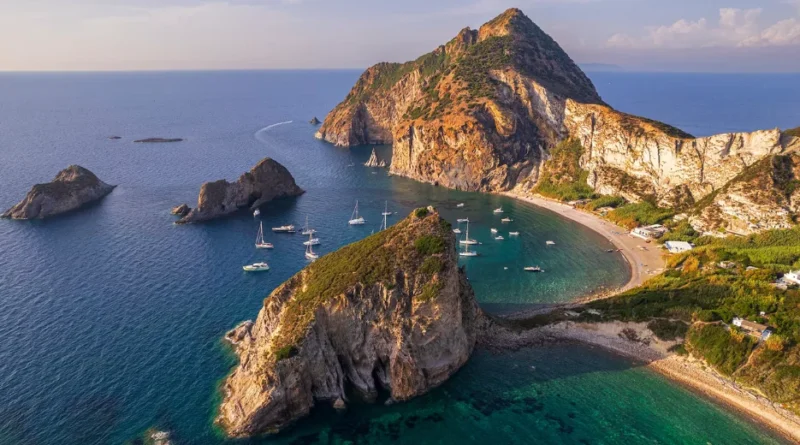
Palmarola is an island without a village or paved streets. There are no power lines, no mobile reception, and no proper harbor. On most days, access depends on small boats that cross from nearby Ponza, roughly five miles away in the Tyrrhenian Sea.
Positioned west of Rome, Palmarola sits close enough for a long day trip yet feels worlds apart from the capital’s noise and congestion. While Rome’s landmarks attract crowds year-round, this small island remains largely overlooked. Many visitors to Italy are unaware it exists, and even residents of Rome rarely make the journey.
Those who do come are drawn by what Palmarola lacks rather than what it offers. Steep volcanic rock formations rise straight from the sea, punctuated by hidden coves and natural caves. The island has just one small beach, a handful of walking trails, and almost no traces of modern construction.
Getting there requires commitment. Travelers must take a train from Rome to the coastal town of Anzio, board a ferry to Ponza, and then arrange private transport by boat to Palmarola — both for arrival and departure. With no permanent population, life on the island follows the rhythms of nature, shaped by wind, waves, and seasons rather than tourism schedules.
Accommodation is limited to a single restaurant, O’Francese, which serves locally caught seafood and offers a few simple rooms built into former fishermen’s grottoes along the cliffs. Stays are booked well in advance and include all meals, with nightly rates starting at about €150 ($175).
Among the island’s regular visitors is Maria Andreini, a 44-year-old remote IT specialist from Treviso, who returns each summer with her husband Mario, a bank employee, and their teenage son Patrizio.
“There’s plenty to do, and almost nothing at the same time,” she says. “We spend the day swimming and snorkeling near the restaurant’s small beach, covered in pink coral stones. At night, we lie under the stars or walk with flashlights. At sunrise, the owners wake us for a hike to the island’s highest point to watch the sun come up. It’s unforgettable.”
Historic ruins
Trails branch off from the shoreline and wind inland, rising toward the crumbling remains of a medieval monastic site and traces of much older human habitation.
“Every evening, dinner is whatever has just been pulled from the sea,” Andreini says. “For a whole week, life feels stripped back to the essentials — like a castaway fantasy. It’s a bit like a Stone Age holiday.” She recommends packing sturdy walking shoes as well as swimwear.
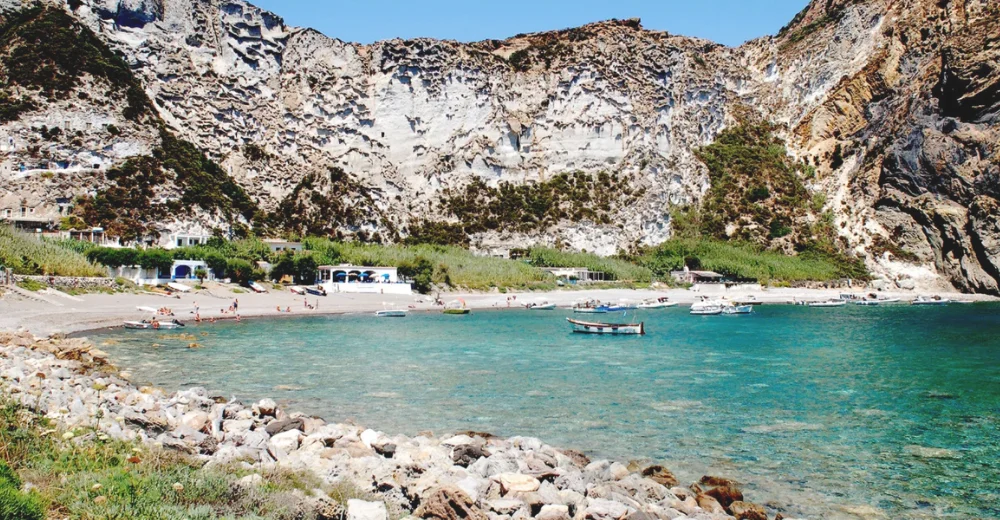
Despite visiting destinations around the world, including the Maldives, Andreini says Palmarola stands apart. The landscape, she explains, is “mesmerizing,” made even more remarkable by its location so close to home. “It’s astonishing that a place this extraordinary exists in Italy,” she says.
Away from the island’s single beach, the rugged shoreline is best discovered by inflatable boat. Sheer cliffs give way to rocky pillars, narrow passages, and sea caves, while the clear waters draw swimmers, kayakers, and divers. On land, wildlife encounters are rare, limited mostly to wild goats that roam among the dwarf palms from which Palmarola takes its name.
The island offers a glimpse into a far more distant past, when early humans were drawn to its deposits of dark obsidian — a volcanic glass once prized for crafting tools and weapons. The stone can still be seen today, etched as black veins across Palmarola’s cliffs. “The landscape has remained remarkably unchanged since those early times,” says Silverio Capone, a local historian.
Capone lives on nearby Ponza, the closest inhabited island and the main departure point for trips to Palmarola. He visits frequently and occasionally brings his teenage son, leaving him to camp on the island with friends for a weekend of wilderness living. According to Capone, Palmarola has never developed into a settled community.
“It has always been an uninhabited island, and that’s precisely its charm,” he explains. “The Romans recognized its strategic value and used it as a lookout point for their naval forces in the Tyrrhenian Sea, but they never established a permanent presence there.”
A religious rite
Palmarola’s modern ownership can be traced back to the 1700s, when families from Naples who were resettled on Ponza were granted permission to divide the neighboring island among themselves. The land remains in private hands today, divided into many small plots owned by families who continue to live primarily on Ponza.
Along the island’s cliffs, modest caves have been adapted into basic retreats, some finished in white and blue paint. These spaces once served as emergency shelters for fishermen caught in sudden storms, and many are still maintained with food and essentials for use when rough seas make it impossible to travel back to Ponza.
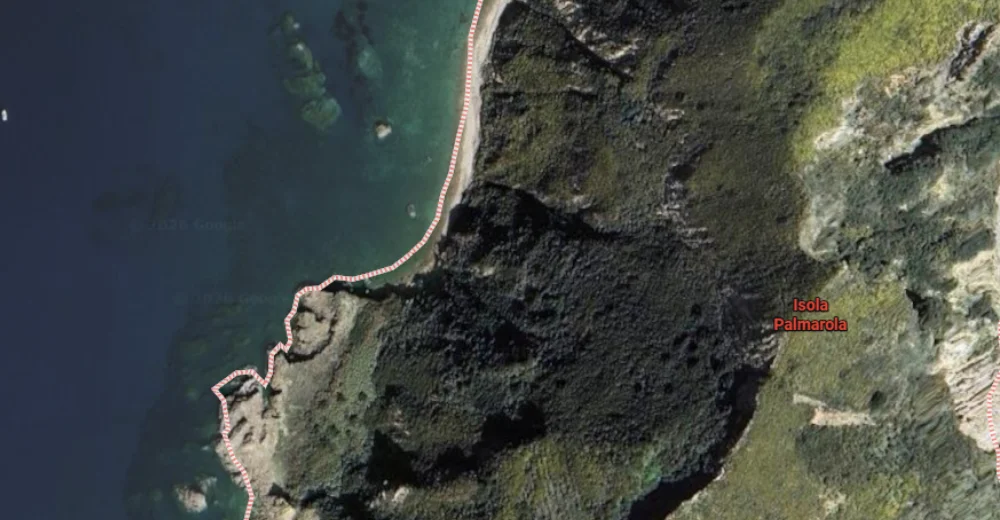
Perched on a rocky sea pillar is a small white chapel honoring Saint Silverius. The former pope, who lived in the sixth century, was banished to Palmarola and is thought to have died on the island.
Every June, the island becomes the focus of a maritime pilgrimage as fishermen travel by boat from Ponza to mark the feast of San Silverio. They bring floral offerings to the chapel and escort a wooden statue of the saint across the water. One by one, worshippers climb the narrow stone steps carved into the rock to reach the upper alcove, where the main altar sits, stopping to pray and reflect.
“It’s a deeply spiritual tradition. We turn to him in prayer every day,” Capone says. “Many men on Ponza — myself included — carry his name because he is our patron saint. There is a strong belief that his presence still watches over the waters surrounding Palmarola.”
According to local folklore, sailors who were once trapped at sea during violent storms called on Saint Silverius for protection — and survived.
Capone recounts stories in which the saint appeared to the stranded crews, emerging from the waves to lead them back to Palmarola. There, the sailors were able to take refuge in the island’s caves, living off stored supplies for weeks until conditions allowed them to return home.