Washington Expands Sanctions on Vessels Carrying Venezuelan Crude
The U.S. Treasury has rolled out a new series of sanctions targeting Venezuela’s oil sector, intensifying efforts to pressure President Nicolás Maduro’s government. Announced on Wednesday, the measures focus on four companies and their associated tankers, which are accused of transporting Venezuelan crude in ways that bypass current sanctions.
The Trump administration has repeatedly labeled Maduro’s leadership a “narco-terrorist” regime, claiming it uses oil revenues to fund operations that undermine stability. According to the Treasury, the newly sanctioned vessels form part of a global network that helps Caracas skirt restrictions and generate funds for the government.
Oil exports are vital to Venezuela’s economy, and U.S. officials have increasingly sought to block the country from international markets. The ships specifically named — Nord Star, Rosalind, Valiant, and Della — are alleged to play a role in evading sanctions, supplying financial resources that sustain Maduro’s regime.
Treasury Secretary Scott Bessent emphasized that Washington will continue to target entities linked to Venezuela’s oil trade, noting that these actions are part of a broader strategy to limit the Maduro administration’s access to international revenue streams.
Disputes Arise Over Venezuelan Oil Shipments
The U.S. government has expanded its sanctions on Venezuela, following a recent move against a Venezuelan company accused of assembling Iranian-designed drones. This latest action is part of a broader strategy by the Trump administration to increase pressure on President Nicolás Maduro’s government.
Officials have cited multiple reasons for intensifying sanctions, including concerns over immigration and Maduro’s contested 2024 election. The administration has also framed the measures as a way to combat illegal drug trafficking, despite Venezuela contributing minimally to the U.S.’s primary target, fentanyl.
Critics argue that the real objective is to exert control over Venezuela’s vast oil reserves and potentially weaken Maduro’s regime. Remarks by senior U.S. officials have reinforced this perception, suggesting historical U.S. involvement in Venezuela’s oil industry and claiming that nationalization of the sector in the late 20th century represented a loss for American investors.
Despite the sanctions campaign, some U.S. oil companies, including Chevron, continue operations in Venezuela under specific agreements. President Trump has publicly emphasized that the United States will not allow a hostile regime to control Venezuelan oil or other assets, calling for their return to U.S. oversight.
Rising Military Activity Reported in the Caribbean
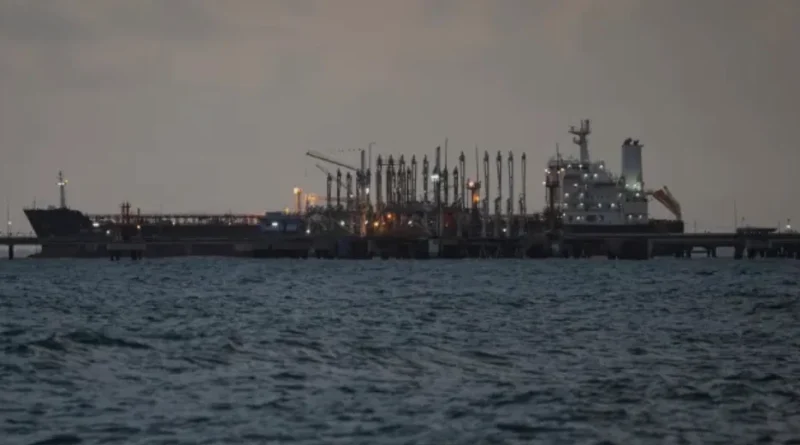
The United States has stepped up its military operations in the Caribbean in recent months, focusing on Venezuela’s oil shipments. This campaign has included the interception of multiple tankers linked to Venezuelan exports, as part of broader efforts to enforce sanctions and control regional maritime traffic.
The first tanker, the Skipper, was seized on December 10, followed by additional seizures in the weeks afterward. U.S. forces are reportedly tracking a third tanker currently crossing the Atlantic.
These maritime operations come amid a surge of U.S. military assets—including aircraft, warships, and specialized units—deployed along Venezuela’s coastline. Since early September, the U.S. has carried out numerous strikes against vessels accused of drug trafficking in the Caribbean Sea and eastern Pacific, an approach that human rights organizations have criticized as extrajudicial.
Officials report that over 100 individuals have been killed in these operations, with limited legal explanation offered by the administration. Recently, the U.S. conducted a strike on a dock area in Venezuela reportedly used for loading alleged drug shipments, marking a rare attack on land-based infrastructure.
While the U.S. government has not officially disclosed which agency executed the dock strike, media reports suggest it was carried out by the CIA, reflecting an intensification of American operations targeting Venezuelan maritime and coastal assets.