Xi Jinping Claims Taiwan Reunification Is Certain, Signals Firm Stance
Chinese President Xi Jinping has reaffirmed Beijing’s commitment to bringing Taiwan under Chinese control, describing the objective of “reunification” as irreversible.
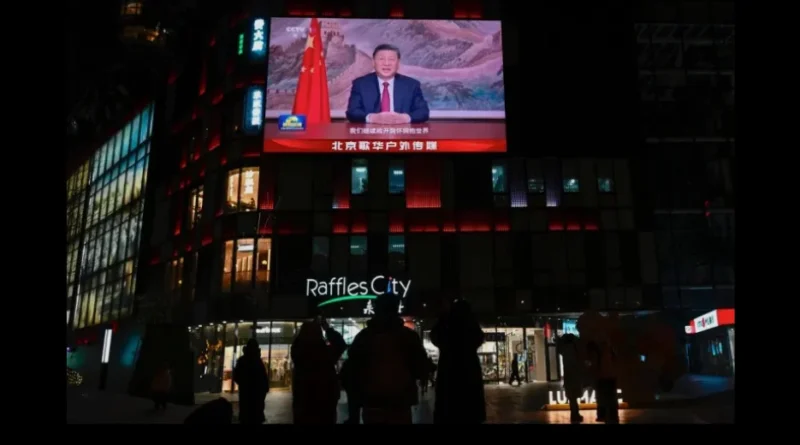
Speaking in a New Year’s message released Wednesday—one day after China concluded military exercises near Taiwan—Xi emphasized shared ancestry and cultural ties between people on both sides of the Taiwan Strait.
Chinese President Xi Jinping declared that the “reunification of our motherland, a trend of the times, is unstoppable.” He also highlighted the establishment in 2025 of an annual “Taiwan Recovery Day,” commemorating the end of Japanese rule over the island following World War II.
Xi’s remarks came shortly after China conducted two days of live-fire military exercises simulating a blockade of Taiwan, which officials described as a “stern warning” to separatist forces and foreign interference. The drills, codenamed Justice Mission 2025, covered the largest area ever for exercises around Taiwan and followed the U.S. approval of an $11.1 billion arms package for the island—its largest to date.
China considers Taiwan part of its territory and has repeatedly vowed to bring the island under its control, including by force if necessary. Taiwan’s ruling Democratic Progressive Party, however, regards the island as a de facto independent state, stopping short of a formal declaration of independence.
In response, Taiwanese President William Lai Ching-te emphasized the need to strengthen the island’s defenses. Speaking on New Year’s Day, Lai said Taiwan must become “safer and more resilient” amid China’s growing expansionist ambitions.
He reaffirmed his commitment to defending national sovereignty, enhancing societal resilience, and building robust deterrence and democratic defense mechanisms.
Although Taiwan operates with its own government, military, passport, and currency, it is formally recognized by only 11 countries and the Vatican. China maintains that nations must choose between official diplomatic ties with Beijing or Taipei, leaving the island largely isolated internationally.
The United States does not officially recognize Taiwan but remains committed to supporting its self-defense under the Taiwan Relations Act of 1979. While Washington is Taiwan’s primary arms supplier, the law does not obligate the U.S. to intervene militarily in the event of a Chinese blockade or invasion.
Opinion surveys indicate that most Taiwanese favor maintaining the current status quo, with far fewer supporting immediate steps toward formal independence or reunification with China.
In his New Year’s address, Xi also praised China’s advances in high-tech sectors such as artificial intelligence and space exploration. “We have driven high-quality development through innovation, integrating science and technology across industries, and generating a series of breakthroughs,” he said. Xi highlighted progress in AI research and domestic chip development, asserting that these achievements have positioned China among the fastest-growing innovation economies in the world.